


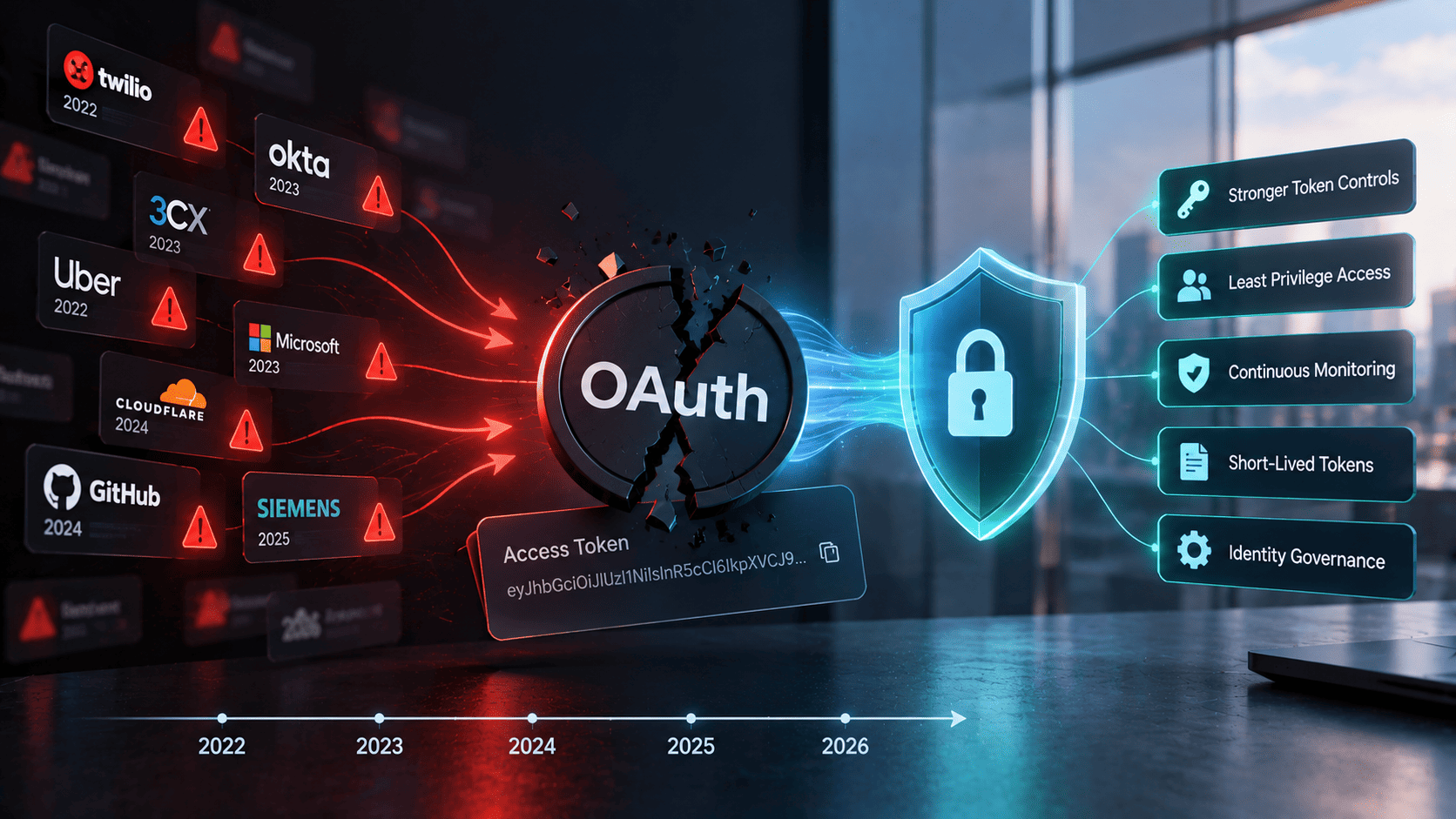

The old security perimeter built around IP addresses and firewalls is no longer enough.
You know that businesses today rely on cloud apps and various connected tools; OAuth 2.0 plays a key role in this, enabling apps to share data without having to share passwords.
But it also creates a new risk, and that is stolen or forged tokens. These tokens can let attackers bypass passwords and MFA. Understanding how OAuth breaches happen can help security teams strengthen identity controls and better protect their cloud environments.
What Is an OAuth Breach and Why Are Tokens a Target?
An OAuth token theft breaches happen when attackers steal or misuse OAuth tokens to access systems. These tokens act like digital keys and can give attackers access to trusted services.
- Easy Access. OAuth tokens can give access without another login. A stolen token may also let attackers get past MFA checks.
- Common Targets. Attackers look for tokens in cloud storage and developer devices. They may also target weak API endpoints and third-party apps.
- Wide Access. A stolen token can let attackers read data and access files. They may also use connected SaaS apps based on the token's permissions. This risk is clear in OAuth breach case studies.
How OAuth 2.0 Authorization Works
OAuth 2.0 lets users give an app access without sharing their password. The process uses tokens to control access and limit what an app can do. This setup is common in third party integration breach risks when tokens are not protected well.
- Simple Login. The user signs in through the identity provider. After approval the app gets a temporary code.
- Limited Access. Each token has set permissions and also an expiry time. The access token handles short term tasks.
- Token Security. Tokens move between services through secure network requests. Since apps use these tokens instead of user passwords, attackers may target them. Good token protection is key to reducing OAuth supply chain attack risks.
Why Stolen OAuth Tokens Can Bypass Authentication
Stolen OAuth tokens can basically bypass the normal login process because they work like an already-approved session. This makes Saas breach OAuth token attacks a serious risk for connected services.
- Pre-Approved Access. Resource servers usually check access tokens when they are received. Depending on the system, they verify details such as the token’s signature, expiration time, issuer, audience, and permissions before allowing access. After that the API may trust anyone who presents a valid token.
- Less Detection. A stolen token does not create a new login event. Attackers can send requests that look like normal API traffic. This can make the breach harder to detect.
- Direct API Access. An attacker can use a stolen token from their own device. If the token is valid and has the right permissions the server may return the requested data.
How Third-Party SaaS Integrations Increase OAuth Risk
Third-party SaaS apps can increase OAuth risk because they add more places where access tokens can be stored. A company may trust these apps without having full control over their security. If one vendor gets hacked the stolen tokens can put connected systems at risk.
- More Access Points. Employees often connect tools for work with just a few clicks. These apps may get access to company files, email and other data through stored OAuth tokens.
- Hidden Risk. Security teams may not have full control over tokens stored by third-party vendors. A single app can create access to many company systems without users fully knowing the risk.
- Vendor Breach. If a vendor is hacked, attackers may steal tokens linked to its customers. They can then use those tokens to enter connected company systems without attacking the company directly.
Major OAuth and Token Breaches From 2022 to 2026
Several major security attacks show how dangerous stolen OAuth tokens can be. Hackers can use these tokens to enter trusted systems without needing a user's password. These attacks also show why companies must protect third-party apps and access tokens.
- GitHub OAuth Integration Breach (April 2022). Hackers stole OAuth tokens that were linked to third-party services such as Heroku and Travis CI. These tokens gave attackers access to systems that were already trusted by users.
- CircleCI Security Incident (December 2022). Malware on an engineer’s laptop allowed attackers to steal an active login session. They then gained access to production systems and stole customer secrets, tokens, and encryption keys.
- Microsoft Storm-0558 MSA Key Compromise (July 2023). Storm-0558 obtained a Microsoft account signing key and used it to create fake authentication tokens. This allowed the group to access affected applications and services.
- Vercel & Context.ai OAuth Supply Chain Breach (April 2026). A breach at Context.ai led to the takeover of a Vercel employee's Google Workspace account. The attackers then used that access to enter Vercel's internal systems.
- Klue SaaS Supply Chain Attack (June 2026). Hackers collected stored customer OAuth tokens from Klue. They then used these tokens to enter CRM environments at different companies. They did not need user passwords to gain access.
What These OAuth Breach Case Studies Have in Common
Analyzing these breaches reveals recurring system vulnerabilities that attackers consistently exploit across modern cloud environments.
Trusted Applications Became Attack Paths
Attackers often do not need to break into a company directly. They can target a trusted app that already has access to company systems. Once they steal its access token they can use that trusted connection to move through the network.
- Trusted Access. Security systems often allow approved apps to make API requests. This means stolen tokens can look like normal traffic. Attackers can use the app's existing permissions to reach private data without raising quick alerts.
- Weak Link. A third-party vendor can become the easiest way into a company. Once attackers get inside the vendor system they can use its token permissions. Security teams may see normal requests from a known app and fail to block the activity.
Excessive Permissions Increased the Blast Radius
Many companies give third-party apps more access than they really need. A simple app may get permission to read and change large parts of a cloud system. If attackers steal its token they can use those extra permissions to cause much more damage.
- Too Much Access. Users may accept default permission requests without checking them. Developers may also give broad access during testing and forget to reduce it later. This leaves apps with more power than they need.
- Greater Damage. A stolen token with wide permissions can let attackers change settings and access private data. They may also create fake accounts or delete important files. The more access a token has the greater the possible damage.
Valid Tokens Can Look Like Legitimate Access
Security tools often watch for failed logins and unusual password activity. But a valid OAuth token can make an attack look like normal app traffic. This gives attackers a way to stay hidden while using a trusted connection.
- Normal-Looking Traffic. A valid token can make API requests look like regular activity. Security tools may not see a reason to block the request because the token is still active and approved.
- Hard to Spot. Most security systems look for signs like failed logins or unusual locations. A stolen token can avoid these checks because it works like a valid user session.
- Longer Attacks. Attackers can make small API requests over time to avoid attention. They may collect sensitive data before security teams notice the problem.
Third-Party SaaS Creates an Identity Supply Chain
Companies now depend on many connected apps and vendor services. These connections create an identity supply chain where one weak vendor can put other companies at risk. A security issue at one vendor can spread through trusted apps and shared access.
- Connected Systems. A company may use hundreds of third-party apps. Each app can hold tokens that give access to important business data and systems.
- Shared Risk. Security is not limited to your own network. If a vendor stores your OAuth tokens in an unsafe place or fails to fix a known flaw attackers may use that weakness to reach your systems.
- Constant Oversight. Companies need to track every connected app and vendor. Regular checks can help find weak security controls before they become a bigger problem.
Which Identity Controls Could Have Prevented or Limited These OAuth Breaches?
Stopping token-based attacks requires more than basic perimeter defense. Businesses need continuous identity governance, active validation, and identity-threat-detection to spot and stop threats faster.
OAuth Application Governance
OAuth application governance helps companies control which third-party apps can connect to their systems. Instead of letting employees approve apps on their own companies can use IT approval and review steps to reduce risk.
- Central Approval. IT teams should review apps before they are connected. They can check the vendor and the reason for access before approval.
- Permission Review. Companies should keep a list of all connected apps. Teams can review what each app can access and remove permissions that are not needed.
- Automatic Removal. Access should end when an app is no longer needed or an employee leaves. Removing old apps and tokens helps close unused entry points.
Least Privilege and OAuth Scope Management
Least privilege means giving an app only the access it needs to do its job. Limiting OAuth scopes can reduce the damage if a token is ever stolen.
- Limit Access. Security teams should review every permission an app requests. An app that only needs calendar access should not get access to email or cloud files.
- Check Permissions. Developers should explain why each permission is needed before an app is approved. This helps prevent apps from getting more access than they really need.
- Audit Regularly. Companies should check app permissions on a regular basis. Unused or broad permissions should be removed to limit the damage from a stolen token.
Token Lifecycle Management and Revocation
Token lifecycle management helps companies control how long OAuth tokens stay active. Short token lifespans and quick revocation can reduce the damage if a token is stolen.
- Short Token Life. Access tokens should expire quickly. This gives attackers less time to use a stolen token. Short lifespans can greatly reduce the risk.
- Rotate Tokens. Refresh token rotation replaces an old refresh token with a new one after each use. If someone tries to reuse a stolen token the system can detect the issue.
- Quick Revocation. Companies need a fast way to revoke tokens after a vendor breach. A central kill switch can block active tokens across connected systems before attackers can move further.
Third-Party Access Reviews and Continuous Monitoring
Regular access reviews help companies find old apps and unused tokens. Continuous monitoring can also spot inactive connections and remove access when it is no longer needed.
- Remove Old Access. Companies should review connected apps on a regular basis. Old apps from past projects or former employees can hold active tokens that attackers may target.
- Watch App Activity. Monitoring tools can track how connected apps are being used. If an app stays inactive for a set time it can be flagged for review.
- Revoke Unused Tokens. Unused apps should lose access when they are no longer needed. Removing old tokens helps reduce the number of entry points attackers can use.
Identity Threat Detection and Response
Identity Threat Detection and Response tools watch how OAuth tokens are used. They look for unusual activity and can help stop attacks before they cause major damage.
- Spot Unusual Activity. These tools track API requests and data use. They can flag changes in location, IP address, or large data transfers.
- Learn Normal Use. The system learns how each app normally works. It can track usual request speed, locations, and data use to create a normal activity pattern.
- Block Fast. If a stolen token is used from a new location or to download large amounts of data the system can raise an alert. It can also revoke the token at once to stop the attack.
How to Prevent OAuth Token Theft in a SaaS Environment
OAuth token theft can let attackers access cloud apps without a password. A few simple security steps can help reduce this risk.
- Limit app permissions. Stop users from approving third-party apps on their own. Ask IT or security teams to review new apps before giving them access.
- Make stolen tokens useless. Use DPoP or mutual TLS to link tokens to approved devices or keys. Keep token lifetimes short so stolen tokens expire quickly.
- Monitor connected apps. Check connected apps often and remove tools that are no longer needed. Use SaaS security tools to find unknown apps and spot risky connections.
InfiSign UniFed helps organizations manage identities and third-party app access from one place. It gives security teams better control over OAuth tokens and user sessions. This helps reduce the risk of stolen tokens and unsafe app connections.
- Centralized OAuth Control. UniFed lets admins review and approve third-party app access. It also limits the permissions each app gets. This helps prevent unsafe connections and reduces the impact of a stolen token.
- Real-Time Threat Detection. UniFed monitors token activity and API requests for unusual behavior. If it detects a suspicious login or IP change, it can quickly revoke active tokens and block further access.
- Simple Token and Session Management. UniFed supports short token lifetimes and automatic refresh token rotation. If a connected vendor is compromised, admins can use a central kill switch to revoke risky tokens without disrupting normal business access.
Protect your business from OAuth and token risks with InfiSign UniFed. Centralize access, control third-party apps, and respond to threats faster. Book a demo today.
FAQ
What Is an OAuth Breach?
An OAuth breach happens when attackers misuse tokens or app permissions to access accounts and cloud data. They can act as trusted users without stealing passwords.
How Are OAuth Tokens Stolen?
Attackers can steal OAuth tokens through phishing, malware, weak vendor security, exposed credentials, or unsafe code. They then use valid tokens to access connected business systems.
Can MFA Prevent OAuth Token Theft?
MFA protects the login process but cannot stop attackers using a stolen OAuth token. Strong token controls, threat detection, and short token lifetimes provide better protection.
What Is an OAuth Supply Chain Attack?
An OAuth supply chain attack happens when attackers breach a trusted software vendor and steal tokens. They use those tokens to access customer systems through trusted connections.
Are Third-Party OAuth Integrations a Security Risk?
Yes, third-party OAuth integrations can create security risks when apps have too many permissions or weak controls. Regular reviews and limited access can reduce these risks.
How Do You Revoke a Compromised OAuth Token?
You can revoke a compromised OAuth token through your identity provider. End active sessions, remove app access, and revoke tokens so the affected application must authenticate again.


