


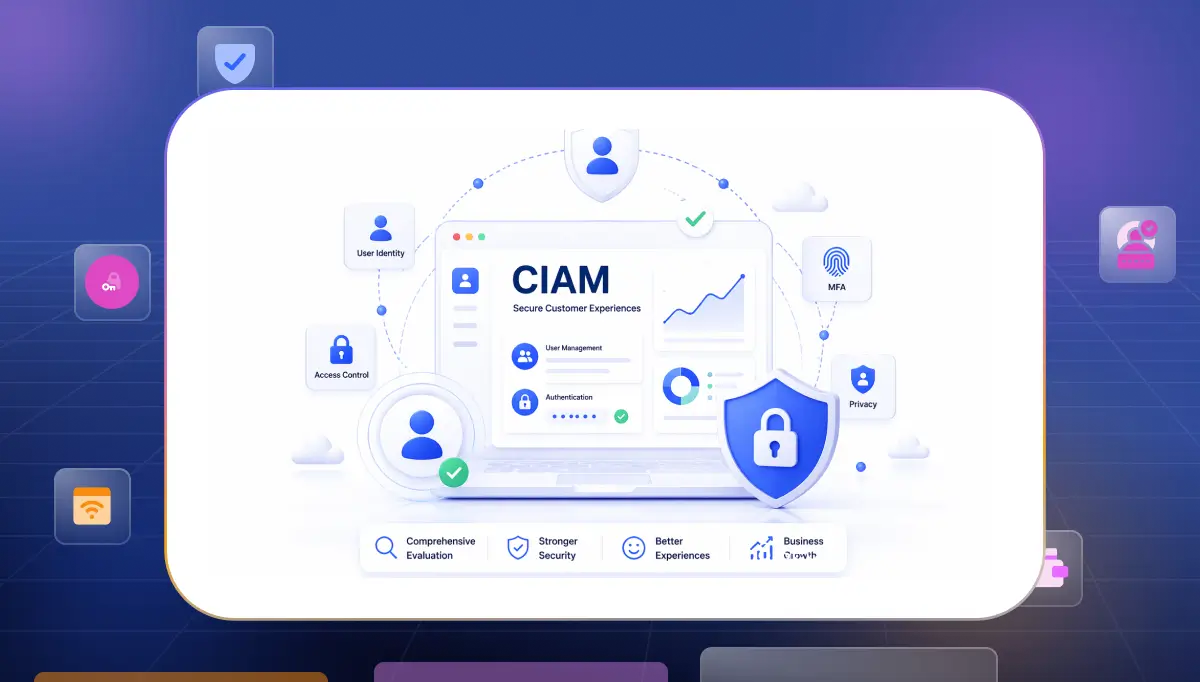

When you evaluate identity today you are not just choosing features you are deciding how your users will experience your product every single day. Strong CIAM platform requirements are the ones that support growth without forcing users to think about security or login complexity.
The best systems feel simple on the surface but handle a lot of complexity behind the scenes. That balance is what separates a basic setup from something that can truly scale.
Core CIAM Capabilities That Drive Business Outcomes
A good identity system does more than authenticate users; it shapes how smoothly your business runs. The right CIAM software capabilities help reduce friction for users while keeping everything controlled and secure in the background.
When these capabilities are connected properly teams spend less time fixing issues and more time building better products. This is where identity starts becoming a growth enabler instead of just a security layer.
Adaptive and Passwordless Authentication
Authentication should not feel like a barrier. It should feel like a natural part of the user journey while still protecting against real risks. Adaptive authentication in CIAM makes a difference by adjusting security based on what is actually happening instead of applying the same rules to everyone.
- Context Awareness. The system should understand signals like device posture, IP reputation, location, login speed, and behavior patterns without making it visible to the user. If something feels unusual the system should respond immediately.
- Passwordless Access. Passwords create usability and security challenges in CIAM because users reuse credentials and phishing attacks exploit them. Modern CIAM systems reduce reliance on passwords by using biometrics and one time codes.
- Risk Based Control. Not every login attempt needs the same level of attention. A user logging in from their usual device should not face multiple checks every time. But when the system detects a change like a new location or device it should trigger step up authentication such as MFA or session verification.
- Continuous Validation. Security should not stop after login is complete. The system should continuously evaluate session behavior using techniques like session risk scoring, anomaly detection and token validation. If a session starts behaving differently it should react without disrupting the user unnecessarily.
Single Sign-On Across Your Entire Stack
Users today move between multiple apps and services without thinking about it. Identity should support that movement instead of slowing it down. Single sign-on helps create one consistent experience while still keeping control in place.
- Unified Access. When users log in once they expect to move across services without being asked again. This removes unnecessary interruptions and keeps the experience clean. It also makes your product feel connected instead of fragmented.
- Standards Support. Behind the scenes the system should support widely accepted protocols so it can connect easily with other tools and platforms. This avoids custom work every time a new system is added.
- Session Consistency. Users should not feel like they are starting over every time they switch between apps. A stable session keeps things flowing naturally. Session management should ensure secure token handling proper expiration and protection against risks like session hijacking or token replay so the experience stays smooth and secure.
- Central Control. Security rules should not be managed in separate places for each application. A central layer makes it easier to apply and update policies across everything. This reduces errors and keeps protection aligned.
- Standards Support. Modern CIAM platforms should support standards like OAuth 2.0 and OpenID Connect for delegated authentication and authorization and SAML for enterprise integrations. Support for FIDO2 and WebAuthn is also important to enable secure passwordless authentication.
Built In Consent and Compliance Management
Users are more aware of how their data is used and they expect clarity. Identity systems should handle this in a simple and transparent way while supporting data protection compliance instead of making it complicated.
- Consent Tracking. Every time a user agrees to something it should be recorded clearly to meet compliance requirements like GDPR, CCPA and other data protection regulations. This helps you stay transparent and accountable and without proper tracking things can become messy very quickly.
- Preference Control. Users should feel that they have control over their own data. Giving them simple options to manage preferences builds trust. It also reduces complaints and confusion. A clear system here improves long term engagement.
- Regulation Support. Different regions have different rules and your system should be ready for that. Compliance should not feel like an extra layer added later. It should be part of how identity works from the start. This reduces risk and avoids last minute fixes.
- Audit Visibility. When needed you should be able to see what happened and when. Clear records help during audits and investigations. This visibility also improves internal accountability. It ensures that nothing is hidden or unclear.
Pre-Built Integration Depth
Identity does not exist alone; it connects with many other systems. Strong CIAM platform capabilities and integration make everything feel like one connected experience instead of separate parts.
- API First Approach. A system with strong APIs makes it easier to connect with other tools. Teams do not have to build everything from scratch. This speeds up development and reduces complexity. It also makes the system more flexible.
- System Connectivity. Identity should work smoothly with tools like CRM analytics and security systems. This creates a complete view of users across the business. It also helps in making better decisions. Without this connection data stays scattered.
- Developer Ease. When developers get ready tools and libraries they can build faster. This reduces delays and frustration. It also lowers the chances of errors during integration. A good developer experience always reflects in product quality.
- Real Time Flow. Systems should react immediately when something changes. Whether it is a login event or a profile update everything should stay in sync. This keeps the experience smooth for users. It also helps maintain accuracy across systems.
Scalability Without Infrastructure Overhead
With system growth identity should never become a bottleneck. It should support scale smoothly and keep pressure away from your team.
- Easy Scaling. The system should support growth without needing constant changes. As more users join, performance should remain stable. It also avoids sudden breakdowns.
- Auto Adjustment. Good systems adjust automatically based on demand. When traffic increases they expand and when it drops they scale back. This keeps things efficient without manual work. It also reduces cost and effort.
- High Availability. Identity should always be available because users depend on it to access everything. Even a small downtime can create major issues. A strong system stays reliable at all times.
- Stable Performance. Speed should not drop when usage increases. Users expect the same experience every time they log in. If performance becomes inconsistent it affects trust. Stability is what keeps everything running smoothly.
Real-Time Visibility and Audit Trails
As systems grow you cannot rely on guesswork to understand what is happening inside your identity layer. You need clear visibility into user actions, system behavior and security events to meet CIAM platform requirements.
This is where strong monitoring becomes essential not just for security but also for operational clarity.
- Activity Tracking. Every login change or action should be recorded in a clear and structured way. This helps teams understand what is happening across the system at any time. It also makes it easier to spot unusual patterns early. Without proper tracking issues often go unnoticed until they become serious.
- Audit Readiness. When audits happen you should not struggle to collect data. Everything should already be available and easy to access. It also shows that your system is well controlled and reliable.
- Incident Investigation. When something goes wrong you need to trace it back quickly. Clear logs help identify what happened and how. This reduces downtime and speeds up response. It also improves long term security by learning from incidents.
- Operational Insight. Visibility is not only about security it also helps improve performance. Teams can see where users face friction or delays. This allows continuous improvement in user experience. Over time this leads to a smoother system.
Directory Sync That Keeps Systems Aligned
In most enterprises user data does not live in one place. Different systems hold different parts of identity and keeping them aligned is critical. Directory sync ensures that changes in one place reflect everywhere without delay.
- Data Consistency. User information should remain the same across all connected systems. If data goes out of sync it creates confusion and access issues. A strong sync process keeps everything aligned.
- Real Time Updates. Changes should be synchronized through real time updates instead of waiting for batch processing. This ensures that permissions and profiles stay current and reduces the risk of outdated access. Real time sync becomes more important as systems scale.
- Reduced Errors. Manual updates often lead to mistakes and inconsistencies. Automation removes this risk and keeps data accurate. It also saves time for teams. Over time this reduces operational overhead.
- System Reliability. When systems stay aligned everything works more smoothly. Users do not face unexpected issues while accessing services.
Multi-Tenant User Management
Enterprises often manage multiple brands, products or customer groups within a single system. Handling this without mixing data or breaking experience requires strong multi-tenant management. This is where multi-tenant identity becomes important.
- Tenant Separation. Each tenant should have clear boundaries for users data and policies. This ensures that one group does not affect another. It also supports security and compliance needs. Proper separation is key at scale.
- Centralized Control. Even with separation teams should manage everything from one place. This reduces complexity and improves efficiency. It also makes it easier to apply global policies. Central control simplifies operations.
- Flexible Customization. Different tenants may need different login flows or branding. The system should support this without creating separate identity setups. It also avoids duplication.
- Scalable Management. As new tenants are added the system should handle them easily. There should be no need to rebuild identity for each one. This supports business expansion. It also keeps costs under control.
Non-Human Identity Management
Identity is no longer limited to human users. Systems now include automated agents that act on behalf of users which changes how identity needs to work. Managing these interactions properly with non-human identities is becoming a core requirement.
- Agent Authentication. Automated or AI driven agents need secure ways to prove their identity. This typically involves token based authentication such as OAuth access tokens, API keys or workload identities managed through secure credential systems. Weak authentication here can create serious risks while strong methods ensure safe interactions.
- Delegated Access. Agents should only perform actions they are allowed to do for a user. Clear boundaries must be defined and enforced. This prevents misuse and overreach. It also maintains trust in automated processes.
- Action Traceability. Every action performed by an agent should be linked back to both the agent and the user. This creates full visibility and accountability. It also helps during audits and investigations. Without this tracking systems lose control.
- Policy Enforcement. The same rules that apply to users should also apply to agents. This keeps security consistent across all interactions. It also simplifies management. A unified policy model is essential at scale.
How Infisign UniFed Delivers on the Capabilities That Actually Matter
Identity only works when systems stay connected and predictable under real usage. Infisign UniFed brings core capabilities into one place so teams avoid gaps and delays while users move through a smooth and consistent experience.
Unified Identity Layer
Infisign UniFed provides a unified identity layer that centralizes authentication, authorization, and user data management across applications and APIs. This removes scattered control across tools and avoids mismatches between systems. When something changes it reflects everywhere so teams work with clarity instead of fixing inconsistencies again and again.
Adaptive and Passwordless Access
Users can access systems using passwordless or low friction authentication methods which reduces dependence on passwords and removes a major source of friction and risk. The system evaluates contextual signals such as device, behavior, and risk patterns to enforce adaptive authentication. Normal activity moves fast while unusual patterns trigger stronger checks.
Single Sign On Across Systems
Users log in once and move across services without interruption with Infisign Universal SSO. This keeps the journey smooth and reduces repeated login steps. Teams manage access from one place which keeps policies aligned across every application.
Built In Consent and Compliance
User permissions and data usage stay clear and trackable. Every action is recorded in a structured way. Teams stay ready for audits without extra effort and users feel more control over how their data is used.
Deep Integration Support
Infisign UniFed connects with existing systems through APIs and ready integrations. Identity stays linked across tools which removes data gaps and improves how systems work together. Teams build faster without breaking existing flows.
Built For Scale
Infisign UniFed handles increasing users and tenants without slowing performance. Systems stay stable as demand grows. Teams do not need to keep adjusting infrastructure or fixing performance issues.
Support for Non-Human Identity
Modern systems include automated agents that act on behalf of users. Infisign UniFed manages these interactions with clear control and visibility. Every action stays traceable which keeps systems secure and predictable.
Book a demo with Infisign UniFed and see how identity can stay simple and controlled at scale. Understand how your system can reduce friction while keeping security strong across every user interaction.
FAQs
What are the most important CIAM capabilities for enterprise organizations?
Enterprises need strong authentication, scalable user management integration support compliance handling and real time visibility. These CIAM capabilities ensure smooth user experience while maintaining control security and operational efficiency across large and complex systems.
What is multi-tenant user management and when does an enterprise need it?
It allows multiple user groups or brands to exist within one system while staying separate. Enterprises need it when managing different products, regions or customer segments without creating isolated identity systems.
What CIAM capabilities are needed for secure customer authentication?
Secure authentication needs adaptive methods, strong verification, continuous session monitoring and risk based control. These ensure users can access systems easily while protecting against threats and unauthorized access across different environments.


