


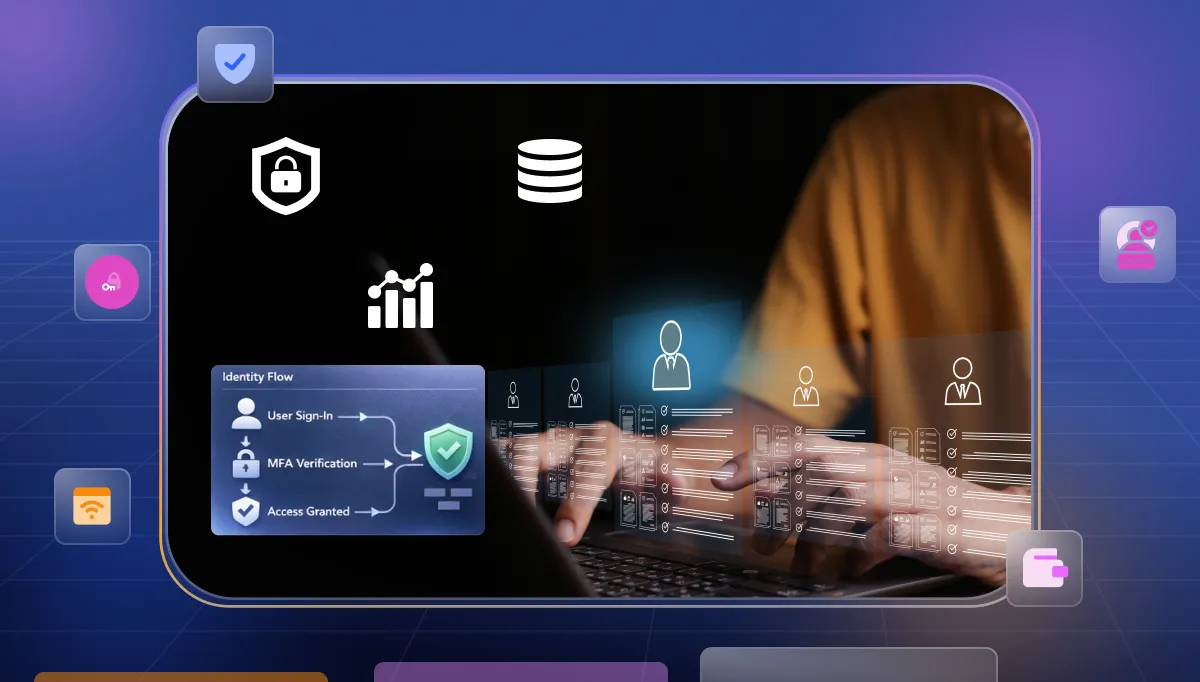

CIAM integration complexity does not just slow down engineering teams, it directly impacts customer experience security and the ability to scale digital products. What begins as simple system connections often turns into fragmented identity flows, inconsistent user experiences and growing operational risk as the environment expands.
As systems evolve teams need a more structured way to manage identity that brings clarity, control and consistency across systems. At scale the challenge is not just integration, it is coordination.
A well structured approach helps reduce friction, improve visibility and manage identity flows without constant rework making integration sustainable over time.
CIAM Integration Challenges Enterprise Teams Actually Face
CIAM integration challenges do not stay limited to engineering teams, they directly affect customer experience, security posture, and overall business performance. When identity flows are inconsistent, login friction increases and customers drop off during onboarding and transactions.
At the same time, limited visibility delays incident response, which increases downtime and operational risk. Fragmented integrations also slow down product releases, as teams spend more time fixing identity issues instead of building new capabilities. Over time, this complexity increases operational cost and makes it harder for organizations to scale in a secure and controlled way.
Legacy systems that predate modern authentication
This is usually where momentum slows down first. Many enterprise systems were built long before modern identity standards became common. They were never meant to support federation or token based flows so they resist change without making it obvious. This becomes a real struggle during legacy system CIAM integration.
- Rigid authentication models. Older systems are comfortable with simple login methods and do not expect anything beyond that. When modern protocols like OAuth or OIDC are introduced, things stop fitting naturally. Teams end up adjusting their implementation just to make it work and that adds fragility.
- Limited extensibility. Most of these systems were not built with integration in mind. You rarely find clean APIs or extension points which forces teams to rely on custom layers. Over time those layers become harder to maintain and even harder to debug.
- Security exposure risk. Every workaround looks small in isolation but the risk builds gradually. Once authentication flows are modified to fit older systems hidden gaps can appear without clear visibility.
Siloed identity data across brands, regions, and product lines
On paper it sounds simple. One user, one identity. In reality the same user exists in multiple systems with slightly different data. Each system tells a different version of the story.
- Fragmented user profiles. You end up with pieces of user data spread across systems and none of them feel complete. Teams hesitate to trust any single source which creates hesitation in decision making.
- Conflict in data ownership. Every team believes their system holds the correct data. Aligning these perspectives takes time and often slows progress more than expected.
- Compliance complexity. When identity data lives across regions enforcing consistent privacy rules becomes difficult. The effort to stay compliant increases as systems grow.
Custom connectors that break silently
Custom connectors often feel like a smart shortcut in the beginning. They help teams move forward when standard integrations are not enough. But over time they become quiet failure points especially in third party integrations CIAM.
- Lack of monitoring. Many connectors run without strong visibility. When something breaks it does not raise a clear signal and issues surfaces only when users are affected.
- Version mismatch issues. Even a small change in an API can disrupt the connection. These breaks are subtle which makes them harder to catch early.
- Hidden technical debt. As these connectors evolve they become harder to understand. New team members struggle to work with them because the logic is not always clear.
Lack of visibility into integration failures
This is where frustration starts building. Issues exist but there is no clear path to trace them. Instead of solving problems teams spend time figuring out where things went wrong.
- No centralized logging. Each system keeps its own logs which makes it difficult to follow a complete identity flow. You only see parts of the story, not the full picture.
- Delayed incident response. Problems are noticed late because there is no real time awareness. By then the impact had already spread.
- Poor debugging experience. Engineers move between systems trying to connect information. Without clear visibility the process becomes slow and exhausting, this delay increases downtime and impacts the reliability of customer authentication experiences.
Proprietary protocols that create vendor lock-in
Some platforms make integration feel easier by using their own methods. It works well in the early stages but creates limits later. This becomes an important factor when teams evaluate best CIAM providers because flexibility matters more over time.
- Limited interoperability. Systems that rely on proprietary methods do not connect easily with tools that follow open standards. This slows down expansion.
- High switching cost. Once everything is tightly integrated moving away becomes difficult and expensive.
- Innovation slowdown. Teams become cautious about trying new tools because everything has to fit into an already restricted setup.
Gaps in user provisioning and deprovisioning workflows
This part looks simple until you try to make it consistent across systems. Managing how users are created, updated and removed requires strong coordination. Many teams underestimate this during CIAM implementation.
- Inconsistent provisioning logic. Each system follows its own rules which leads to mismatched access. Over time this creates confusion for both users and teams.
- Delayed deprovisioning. Access is not always removed when it should be. Over time, these small delays increase security risk, leading to compliance exposure and a higher risk of unauthorized access.
- Manual interventions. When automation breaks people step in to fix things quickly. These fixes solve immediate issues but create inconsistency later.
AI Agents Authentication
Now identity is no longer limited to people. AI agents and machine identities are becoming part of everyday operations. They behave differently and require a different approach. This is becoming an emerging consideration in CIAM integration as machine identities become more common in digital ecosystems.
- Non human identity complexity. These identities run continuously and do not follow normal user patterns. Defining their access needs more careful thinking.
- Token management challenges. Long running access increases exposure if tokens are not handled properly. Managing their lifecycle becomes critical.
- Audit and accountability gaps. When both humans and machines act within systems, tracking responsibility becomes harder. Clear visibility is needed to stay in control.
How to Avoid CIAM Integration Pitfalls
Once you understand where things break the next step is not to fix everything at once. That approach usually creates more confusion. The real progress comes from simplifying how systems interact and making responsibilities clear across teams.
Most successful teams do one thing well. They reduce uncertainty. They make sure everyone knows what is happening and who is responsible for what. That clarity changes how integration behaves over time.
Build a clear integration ownership model
Many integration issues stay unresolved simply because no one owns them fully. When responsibility is shared loosely problems move slowly and often get ignored.
- Define system accountability. Every integration flow should have one clear owner. When something breaks there should be no confusion about who takes action.
- Create shared visibility. Teams should not work in isolation. Everyone involved should understand how identity moves across systems so issues are easier to track.
- Align on decision authority. Changes should not get stuck in long discussions. A clear decision path helps teams move faster without unnecessary delays.
Standardize around open identity protocols
Flexibility comes from using approaches that are widely supported. When systems follow common standards integration becomes easier to manage and extend.
- Adopt widely accepted protocols. Using standard methods for authentication helps systems communicate without heavy customization. This reduces friction during integration.
- Reduce custom logic. The less custom code you introduce the easier it becomes to maintain the system. Standardization removes unnecessary complexity.
- Enable smoother expansion. When new systems are added they connect faster because they already support the same standards.
Introduce an integration abstraction layer
Direct connections between systems create tight dependencies. Over time this makes changes risky and difficult to manage.
- Decouple systems. An abstraction layer acts as a buffer so changes in one system do not immediately affect others. This improves stability.
- Centralize transformation logic. Data mapping and formatting can be handled in one place. This keeps behavior consistent across integrations.
- Simplify maintenance. Instead of managing multiple connections teams focus on one controlled layer which reduces effort and confusion.
Invest in real time monitoring and observability
Without visibility teams operate on assumptions. That is where most delays and mistakes begin.
- Implement centralized logging. Bringing logs into one place helps track issues across systems without jumping between tools.
- Set up proactive alerts. Systems should notify teams as soon as something fails. Waiting for user complaints creates unnecessary damage.
- Track end to end flows. Understanding the full journey of identity across systems makes debugging faster and more accurate.
Design strong user lifecycle management
Managing identity is not just about login. It is about how users move through the system over time.
- Automate provisioning rules. Clear rules ensure users are created and updated consistently across systems.
- Ensure timely deprovisioning. Access should be removed as soon as it is no longer needed. Delays create avoidable risk.
- Maintain data consistency. All systems should reflect the same user state so there is no confusion in access or permissions.
Prepare for AI and non human identities
Modern systems are no longer limited to human users. Machine driven interactions are increasing and they need proper control.
- Define identity models for agents. These entities should be treated like structured identities with clear boundaries.
- Control token lifecycles. Access credentials should be managed carefully to avoid long term exposure.
- Enable audit trails. Every action should be traceable so teams can understand what happened and why.
Start Simplifying Your CIAM Integration Today
If your current CIAM integration is becoming harder to manage as systems grow it may be time to rethink how identity flows are structured and governed. A more unified and observable approach can bring better clarity and control across systems.
Platforms like Infisign UniFed support this shift by helping teams reduce integration complexity and maintain consistent identity flows without heavy rework. With better visibility and simpler coordination teams can move faster and scale in a more stable and secure way.
A smarter way to handle identity integration at scale
As systems grow manual fixes and scattered tools stop working. Teams need a unified way to manage identity flows across applications without constant rework. The right platform removes friction instead of adding another layer of complexity.
- Unified identity orchestration across systems without heavy custom integration overhead
- Pre built connectors that reduce dependency on fragile custom development efforts
- Centralized visibility for tracking authentication flows across multiple connected systems
- Flexible integration layer that adapts easily to evolving enterprise architecture needs
- Built in lifecycle management to handle user provisioning and access changes smoothly
- Strong support for machine identities and automated access control across environments
- Real time monitoring with alerts to detect failures before users experience issues
Real time monitoring with alerts helps detect failures before users are impacted. If your setup feels harder to manage than it should be it may be time to move toward a more unified identity approach.
Infisign brings integration visibility orchestration and lifecycle management together so teams can reduce complexity and stay in control. You can explore a live demo to see how it works in real environments.
FAQs
How do you integrate CIAM with legacy systems that do not support modern authentication protocols?
It is better not to directly retrofit modern authentication standards into legacy systems without an abstraction layer as that often creates instability. Introducing an adapter layer helps translate modern identity flows into a format that legacy systems can handle more reliably.
How do you prevent consent synchronization failures between CIAM and CRM?
The first step is to define one clear source of truth for user consent so there is no confusion across systems. Then you move to event based updates so changes reflect instantly instead of waiting in batches. This reduces the chances of mismatch and keeps data aligned.
Should we build our own CIAM integration layer or buy a platform with pre-built connectors?
If your environment is simple then pre-built connectors can save time and effort in the beginning. But as complexity grows connectors that are not designed for extensibility become limiting and harder to adapt. A balanced approach works better where you use platforms for speed and maintain your own layer for flexibility.


