


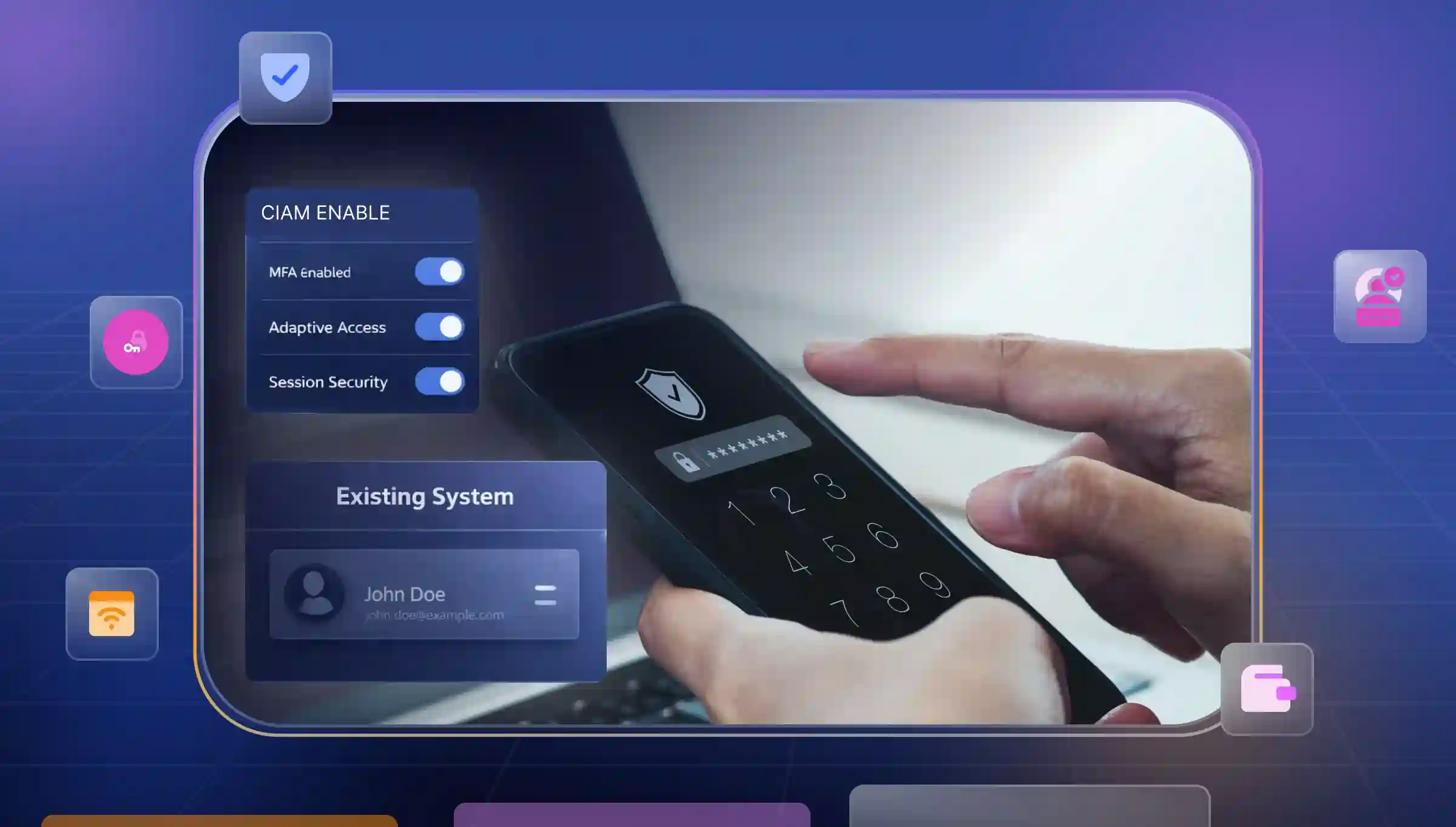

Modern identity systems are no longer just about access control but about how users experience your platform at every step. As digital ecosystems expand th
e pressure on identity systems continues to grow and older setups begin to fall out of sync.
This is where CIAM modernization becomes important not as a technical upgrade but as a shift toward better control visibility and user alignment. Without it systems may continue to run but they slowly lose efficiency in ways that are not always visible at first.
Over time these gaps begin to affect both user trust and operational clarity.
What your legacy CIAM is quietly costing you right now?
Legacy identity systems rarely fail in ways that are easy to notice which is why they stay in place for a long time. They continue to function on the surface but slowly fall out of sync with user behavior and system growth.
The real issue is not visible failure but the buildup of small inefficiencies across experience control and security. This is where legacy CIAM problems begin to surface not as sudden breakdowns but as ongoing friction that affects trust and clarity over time.
As Alex Weinert highlights, modern identity threats are increasing rapidly with Microsoft observing over 1,287 password attacks per second, showing how traditional identity approaches struggle to keep up with evolving risk .
Experience and User Trust
As systems age the experience does not break suddenly but starts to shift in small ways. These changes may seem minor but they shape how users feel about the platform over time especially when customer identity and access authentication begins to feel inconsistent.
- Experience Drift. Users face small inconsistencies during login and session handling instead of one clear issue. These interruptions break the flow and make access feel less reliable. Over time users lose confidence even if the system still works.
- Inconsistent Journeys. Movement between devices or sessions does not always feel smooth or connected. Users may need to repeat steps or face unexpected interruptions. This creates friction that slowly affects engagement.
Operational Pressure
As identity issues increase they begin to change how teams spend their time. Instead of improving systems teams get pulled into fixing repeated access problems.
- Support Pressure. Password resets and recovery requests grow steadily and add continuous load on support teams. Each request increases cost without improving system quality. Teams stay busy with access issues instead of meaningful improvements.
- Resource Drain. Engineering effort shifts toward maintaining legacy identity flows instead of building new capabilities. This slows down product development and reduces overall efficiency. Progress becomes harder to sustain.
Data and Visibility Gaps
Without a unified identity layer systems lose clarity in how users are understood. This makes both security and product decisions less reliable.
- Fragmented Data. User identity is spread across multiple systems without a single consistent view. This breaks visibility into behavior and access patterns. Teams are forced to work with incomplete information.
- Limited Insight. It becomes difficult to track user activity across platforms in a connected way. This affects personalization and risk detection at the same time. Decisions remain reactive instead of informed.
Security Limitations
Security in legacy systems often looks stable until it is tested against modern threats. The gap appears because systems do not adapt as quickly as attack patterns evolve.
- Static Authentication. Fixed rules do not adjust to changing user behavior or risk conditions. This makes systems predictable and easier to target over time. Protection lacks flexibility.
- Delayed Detection. Threats are often identified after suspicious activity has already occurred. This increases exposure and response time. Security feels stable but is not proactive.
The Hidden Business Cost of Legacy CIAM That Most Teams Ignore
Legacy CIAM does not break suddenly but users start feeling friction in small ways during login sessions and recovery. This creates a silent cost across support growth and security while the system still appears to work.
- Support Cost Growth. Users get stuck more often during access and reach support repeatedly. Each request can cost around 70 dollars and at scale this becomes a serious expense while also reducing user trust.
- Operational Cost at Scale. Identity issues can take up to 50 percent of support workload which means effort goes into fixing friction instead of improving the product.
- Engineering Effort Loss. Teams spend time maintaining old identity flows instead of improving user experience. Modern automation can reduce this work by around 60 percent which shows how much progress is being delayed.
- Security Risk to User Accounts. More than 80 percent of breaches involve stolen credentials and the cost can exceed 4.45 million dollars. This directly damages user trust.
- Revenue and Conversion Loss. Small login friction causes drop offs during signup and repeat visits. Even minor issues at this stage reduce conversion and long term retention.
What Outcomes Organizations Actually See After CIAM Modernization?
When CIAM modernization is done right identity stops slowing users down and starts supporting growth. The impact shows up in daily interactions but directly improves conversion, reduces cost and strengthens security over time.
Access and Experience Improvements
- Faster Access. Login becomes simple and consistent across devices which reduces drop offs during signup and directly improves conversion and revenue.
- Session Consistency. Users move across sessions without interruption which increases retention and keeps users engaged with the platform longer.
Security and Control Enhancements
- Adaptive Security. The system adjusts based on user behavior so genuine users move smoothly while risky activity is blocked which reduces fraud loss without hurting experience.
- Real Time Risk Response. Threats are handled during the session which prevents breaches early and avoids high recovery and compliance costs.
Identity and Data Visibility
- Unified Identity. A single user view improves personalization and targeting which increases marketing efficiency and user lifetime value.
- Better Visibility. Clear activity insights help teams make faster and more accurate decisions which improves both product performance and risk control.
Operational Improvements
- Operational Efficiency. Fewer login and recovery issues reduce support cost and allow teams to focus on growth instead of fixing access problems.
- Scalable Performance. The system handles more users without breaking which supports business growth without increasing operational overhead.
How to Migrate Legacy to Modernized CIAM in a Safe Way?
Migration is where most organizations struggle because they focus on change instead of control. A safe migration does not begin with disruption. It begins with clarity around identity structure and risk. This is where many challenges in migrating from legacy IAM to modern CIAM start to appear.
Start with identity consolidation, not authentication changes
Before changing login flows you need to stabilize identity underneath. Without consolidation every change increases complexity. A unified identity layer gives you control and visibility.
- Stabilize identity layer. Begin by bringing user identities into a single controlled structure. This removes duplication and confusion across systems. It creates a reliable foundation for further changes. Without this step migration remains unstable.
- Improve visibility. Consolidation allows teams to see how users interact across platforms. This helps identify risk patterns and usage behavior. Decisions become data driven instead of assumption based. Visibility reduces uncertainty during migration.
- Reduce fragmentation. Multiple identity sources create inconsistency in experience. Consolidation removes these gaps and creates continuity. Users experience smoother transitions across channels. The system becomes easier to manage.
Migrate in phases — by risk level, not by team or product line
Migration should be guided by risk not by internal structure. Moving everything at once increases failure probability. A phased approach gives better control and flexibility. This is where a strong CIAM migration strategy becomes essential.
- Prioritize by risk. Identify high risk areas and migrate them with caution. Low risk areas can move faster with less impact. This reduces exposure during transition. Control improves at every stage.
- Test in real conditions. Phased rollout allows validation under actual user behavior. Performance and security can be observed before scaling. Issues can be fixed early. This prevents large scale failure.
- Maintain continuity. Gradual migration ensures users are not disrupted. Systems continue to function while improvements are introduced. This builds confidence in the process. Stability remains intact.
Plan password hash migration explicitly
Password handling is often underestimated during migration. It is one of the most sensitive parts of identity systems. Poor handling can create access issues or security risks.
- Define migration approach. Decide whether to move existing hashes or re authenticate users. Each approach has trade offs. The goal is to maintain access without weakening security. Clear planning avoids confusion later.
- Protect user access. Ensure users are not locked out during transition. Continuity is critical for trust. Even small disruptions can impact retention. Access must remain stable.
- Upgrade security standards. Migration is an opportunity to strengthen password policies. Weak legacy methods should be replaced. Security should improve as systems evolve. This prevents future vulnerabilities.
What to Consider Before CIAM Migration?
Before starting migration most organizations focus on tools and timelines. The real preparation is different. It is about understanding system dependencies, user behavior and risk exposure within your CIAM software environment.
Without this clarity even a strong plan can fail during execution. This is where careful planning around CIAM platform migration becomes critical.
- System dependencies. Identity rarely exists in isolation. It connects with applications APIs and external services. You need a clear view of these dependencies before making any change. Missing one connection can break critical flows. Mapping dependencies reduces unexpected failure.
- User journey impact. Migration should not disrupt how users access the system. You need to understand where friction already exists. Changes should improve experience not complicate it. Every step should feel natural to the user. This requires careful observation before execution.
- Data integrity. User data must remain consistent during migration. Any mismatch can create access issues or trust problems. Data validation needs to be part of the process. Systems should reflect accurate identity at all times. Integrity builds confidence.
- Rollback readiness. Not every migration step will go as planned. You need a clear rollback strategy before moving forward. This allows recovery without major disruption. Control during failure is as important as success. Prepared systems recover faster.
Start Your Customer Identity Modernization Now
CIAM modernization is not about replacing systems all at once. It is about creating a unified identity layer that works across applications identity providers and user flows without disruption.
Platforms like Infisign UniFed are designed to support this shift by combining control flexibility and real time decision making.
- Unified Identity. Infisign UniFed brings identities into one layer while still supporting multiple identity providers. Enterprise clients can use their own IDPs without breaking the overall flow. This removes fragmentation, improves visibility and creates a consistent user experience across channels.
- Adaptive Security. Authentication is based on real time context like user behavior, devices and risk signals. Genuine users move smoothly while risky activity is verified instantly. This reduces fraud and strengthens security without adding friction.
- Passwordless Access. Support for passwordless authentication reduces reliance on traditional credentials. This lowers attack surface speeds up login and improves user experience especially at scale.
- Flexible Integration. API first architecture allows identity to connect across existing systems without heavy changes. Organizations can modernize gradually instead of replacing everything at once which reduces migration risk.
- Clear Visibility. A centralized identity layer gives teams a complete view of user activity. This improves monitoring decision making and overall control while reducing operational complexity.
Book a demo with Infisign to see how modern CIAM improves access security and scalability. Explore a system designed to fit your existing setup without disruption and support long term growth.
FAQs
How long does a CIAM modernization project typically take?
CIAM modernization timelines vary based on system complexity and migration scope. Most projects take three to nine months when executed in phases with controlled rollout and continuous validation.
How does CIAM modernization affect compliance with GDPR, CCPA, and other regulations?
Modern CIAM improves compliance by enabling better consent management data control and audit visibility. It helps organizations align with regulatory requirements while maintaining transparency and reducing legal and operational risk.
What's the difference between modernizing CIAM and replacing it entirely?
Modernization improves existing systems without full disruption while replacement involves rebuilding from scratch. Modernization focuses on continuity and risk control whereas replacement introduces higher disruption and implementation complexity.


