


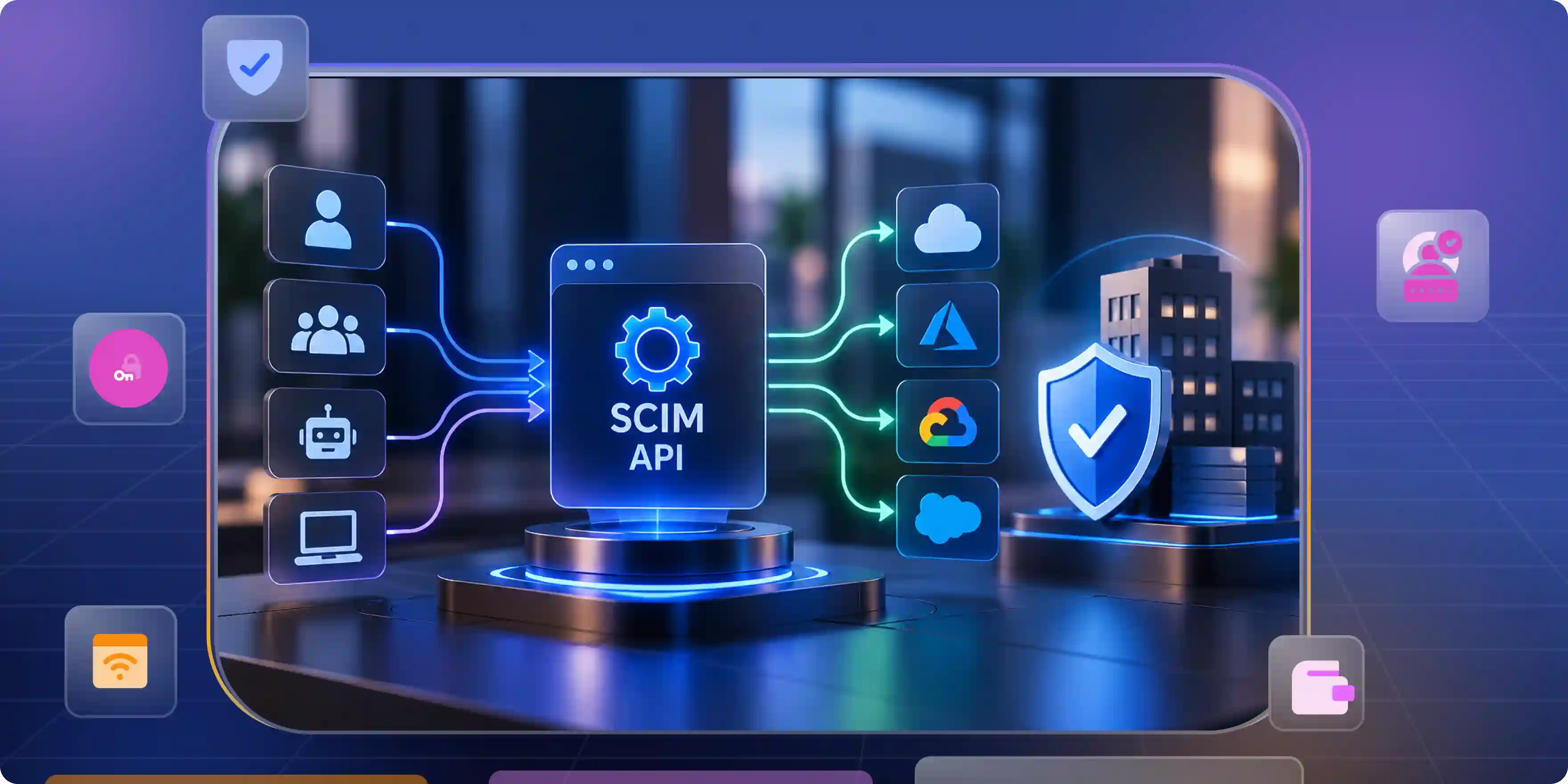

Many SaaS companies invest significant time in building secure and user-friendly authentication experiences. They refine login flows, strengthen security controls, and focus on making access management seamless.
Then a large enterprise prospect asks a simple question: “Do you support SCIM?” Suddenly, user provisioning becomes a critical part of the conversation.
Enterprise organizations expect user accounts to be created, updated, and deactivated automatically as employees join, change roles, or leave the company.
Because of this, a SCIM API is no longer just an additional feature. It plays a key role in enterprise identity management, operational efficiency, and security. For many SaaS vendors, strong SCIM support can be an important factor in meeting enterprise requirements and moving deals forward.
Your SCIM API Is Now Part of the Enterprise Deal
Large enterprises evaluate software differently than small businesses. Their priorities often center on security, operational efficiency, and seamless user management. At the core of these requirements is the ability to manage user accounts effectively.
Modern organizations expect user onboarding and offboarding to happen automatically, without relying on manual processes. This is why SCIM integration, powered by SCIM Provisioning standards, is a must-have for enterprise software.
- Enterprise Buyers Expect Automation. Making accounts by hand creates extra work. IT teams prefer tools that handle user accounts automatically. Automation stops costly mistakes.
- Security Depends on Fast Deprovisioning. When an employee leaves the organization, their access should be removed as quickly as the provisioning and access management systems allow.
- IT Teams Want Fewer Support Tickets. Doing things by hand leads to confusion. Automated account management means fewer requests for password fixes and access updates. That saves time for everyone.
- Enterprise Procurement Is Evolving. Many big buyers check for automatic account management before buying. Companies without these features miss out on big deals.
What Breaks When Okta and Entra Hit Your SCIM API
A SCIM setup may work perfectly during testing, but real-world enterprise environments are far more demanding. Identity platforms often send multiple provisioning requests at the same time, which can expose performance bottlenecks.
Solutions like Okta and Microsoft Entra are often the true test of whether your system is ready for enterprise-scale deployments.
By following SCIM 2.0 standards and choosing the right SCIM provider, organizations can avoid provisioning delays, synchronization issues, and other day-to-day operational challenges.
- User Updates Arrive Faster Than Expected. Company directories change all the time. Job titles departments and access levels shift throughout the day. Systems must handle these changes smoothly.
- Duplicate Accounts Start Appearing. Matching the wrong users creates double accounts. This seems small at first but gets messy as user numbers grow.
- Group Membership Becomes Complex. Big companies use groups to give people permissions. Your system must update groups correctly while keeping data safe.
- Error Handling Gets Tested Hard. Real users cause real problems. Missing info, weird data and slow updates will happen. Systems need clear error notes and good logs.
- Rate Limits Become Important. Big companies send a lot of data at once. An API that works in testing might fail when thousands of workers join.
- Tenant Separation Gets Challenged. Apps with many customers must keep data split up. A request from one customer should never touch another customer's data.
Should You Build Your SCIM API or Buy It
Software teams often wonder if they should build account tools themselves or buy them. The right choice depends on your goals, and customer needs. Building gives you total control. Buying saves time and cuts down on extra work for your developers. Understanding user provisioning and deprovisioning can help you make a smarter decision based on your long-term identity management requirements.
When Building It Yourself Makes Sense
Building your own system gives you full control over how accounts work. This path works best if identity features are a main part of your product.
- You Need Complete Flexibility. Some products have special needs that standard tools cannot handle. Building lets you make custom setups.
- Your Engineering Team Has Identity Expertise. Identity tools have tricky parts. Teams that know identity well can build and fix things easily.
- Provisioning Is Strategically Important. If handling accounts helps you beat competitors then building it yourself adds long-term value.
- You Can Support Ongoing Maintenance. Building is just the first step. You also need to fix bugs, update tools and handle new requirements over time.
When a SCIM Provider Wins
Not every team wants to spend time building identity tools. Using dedicated SCIM providers helps you launch faster with less effort. This path gets your product ready for big buyers much quicker.
- Faster Time to Market. Ready-made tools cut down build time. This lets you say yes to big buyers much faster.
- Reduced Engineering Burden. Account systems need constant updates. Using a provider takes that heavy work off your team.
- Proven Enterprise Compatibility. Known providers already work well with major identity tools. This means fewer problems when setting things up for customers.
- Easier Long-Term Scaling. As customer numbers grow, data needs increase. Experienced providers know how to handle high traffic easily.
When SCIM Belongs Inside Your CIAM
Some teams group account management into their main user login setup. Putting everything in one place makes managing user accounts much smoother. Many organizations also use Just-in-Time (JIT) provisioning to automatically create user accounts during login. This reduces manual effort and improves the onboarding experience.
- Identity Workflows Stay Connected. Sign-ins, user profiles and account updates all live in one place. This makes everything easier to manage.
- Customer Onboarding Becomes Easier. Big buyers like using fewer tools. Combining sign-ins and account tools makes setup simple.
- Governance Improves. Central systems make it easy to see who created updated or removed accounts.
- Lifecycle Management Becomes Stronger. Modern identity platforms handle SCIM user provisioning right alongside normal sign-ins. This helps manage users from their first day to their last day.
What to Ask Before You Trust Any SCIM API
A demo might look good even if it is not ready for real work. Real buyers ask tough questions about errors speed and data safety. Checking these areas ensures your API can handle thousands of users without crashing.
Works With Every Customer IdP
Big companies use different identity tools like Okta Microsoft Entra or Ping Identity. A good account system works smoothly with all of them.
- Supports Common Identity Providers. Customers expect your app to connect easily with their main identity tools without custom coding.
- Handles Attribute Differences. Different tools send user info in slightly different ways. Good setups handle these differences without breaking.
- Supports Future Expansion. Identity tools keep changing. A flexible system easily adapts to new features in the future.
- Reduces Customer Friction. The easier it is to connect tools the faster you can close deals and get customers started.
Removes Access Completely
Creating accounts is important but removing them quickly is vital for safety. Good account systems treat user removal as a top priority.
- Access Should Disappear Quickly. When a worker leaves, access should be revoked promptly to help reduce security risks and prevent unnecessary access.
- Deactivation Should Be Consistent. User deactivation changes should be consistently propagated across connected applications to help ensure that unnecessary access is removed without delay.
- Audit Trails Matter. Organizations may need a clear record of account changes and deprovisioning activities. Audit logs help track what changed and when it occurred.
- Strong Security Depends on Automation. Reliable SCIM provisioning is most effective when user creation, updates, and removals are handled automatically with minimal manual effort.
Keeps Tenants Isolated
Apps with many customers must keep each customer's data totally separate. Big buyers check data privacy very closely before signing contracts.
- Customer Data Must Stay Separate. Account actions must only touch the right customer files. Clear boundaries keep data safe.
- Permissions Must Remain Accurate. User rules must always match the correct company account. Permission mistakes lead to big problems.
- Scaling Should Not Increase Risk. Keeping data separate is even more important as user numbers grow. Systems must keep boundaries strong at any size.
- Security Reviews Will Test This Area. Security teams test data safety during sales reviews. Strong controls help you pass checks faster.
Shows You What Failed
Network drops and small errors happen during updates. Clear error notes help your team fix problems quickly without guessing.
- Error Messages Should Be Useful. Simple error notes help admins fix problems quickly instead of wasting time.
- Logs Should Be Easy to Search. Good logs help teams find missing updates and fix issues fast.
- Administrators Need Visibility. Teams should easily spot failed updates or delays without deep investigations.
- Provisioning and Identity Must Align. Enterprise buyers often evaluate user updates alongside SCIM provisioning and SSO, and clear visibility across both areas helps build confidence in the solution.
Get Provisioning Right Before the Next Enterprise Deal Asks
Waiting until a deal demands SCIM creates unwanted sales stress. Big buyers expect automatic account setups as a basic rule. Building your system early removes sales delays and builds customer trust.
- Enterprise Expectations Continue Rising. Buyers want more automated features every year. They expect simple hands-free setups.
- Provisioning Influences Buying Decisions. A strong setup removes doubts during sales calls. Weak setups block deals even if your main product is great.
- Security Depends on Lifecycle Management. Sign-ins protect logins. Account tools protect users the whole time they use your product.
- Preparation Creates Opportunity. Teams that set up account tools early close big deals much faster. Good preparation gives you an advantage over competitors.
The next big customer might not ask if you handle user accounts automatically.
They will simply expect that you do.
Many SaaS companies need more than basic user provisioning as they grow into the enterprise market. Infisign UniFed helps simplify identity operations by bringing key identity and access management functions into a single platform.
- Unified Identity Platform – Combines SSO, SCIM provisioning, and user lifecycle management in one solution.
- Enterprise Integrations – Connects with major identity providers and business applications for automated onboarding and offboarding.
- Access Governance & Visibility – Provides centralized control, audit visibility, and stronger compliance across user access workflows.
Enterprise buyers expect identity management to work without friction. If you're evaluating SCIM provisioning, SSO, or user lifecycle automation, book a quick conversation with the Infisign team and see how UniFed can fit into your existing stack.
FAQ
Q. What is the difference between SCIM and SSO?
SSO lets users sign in once to access many apps. SCIM handles creating, updating and deleting user accounts automatically.
Q. How do you authenticate a SCIM API?
SCIM does not include its own authentication method. Instead, implementations can rely on standard HTTP authentication and authorization mechanisms, such as bearer tokens used with TLS. Before granting access to SCIM resources, service providers must authenticate and authorize clients.
Q. What is the difference between SCIM and JIT provisioning?
SCIM provides a standardized API-based approach for provisioning and managing user accounts and other identity resources. JIT provisioning, on the other hand, creates or updates user accounts during the authentication process, depending on how it is implemented.
Q. What changed between SCIM 1.1 and SCIM 2.0?
SCIM 2.0 introduced updated protocol and schema specifications, including standardized resource schemas, PATCH support, and endpoints for service provider discovery and configuration. The framework is defined by RFC 7642, RFC 7643, and RFC 7644.
Q. Which identity providers support SCIM 2.0?
Major tools like Okta Microsoft Entra Ping Identity and OneLogin all support SCIM 2.0.


