


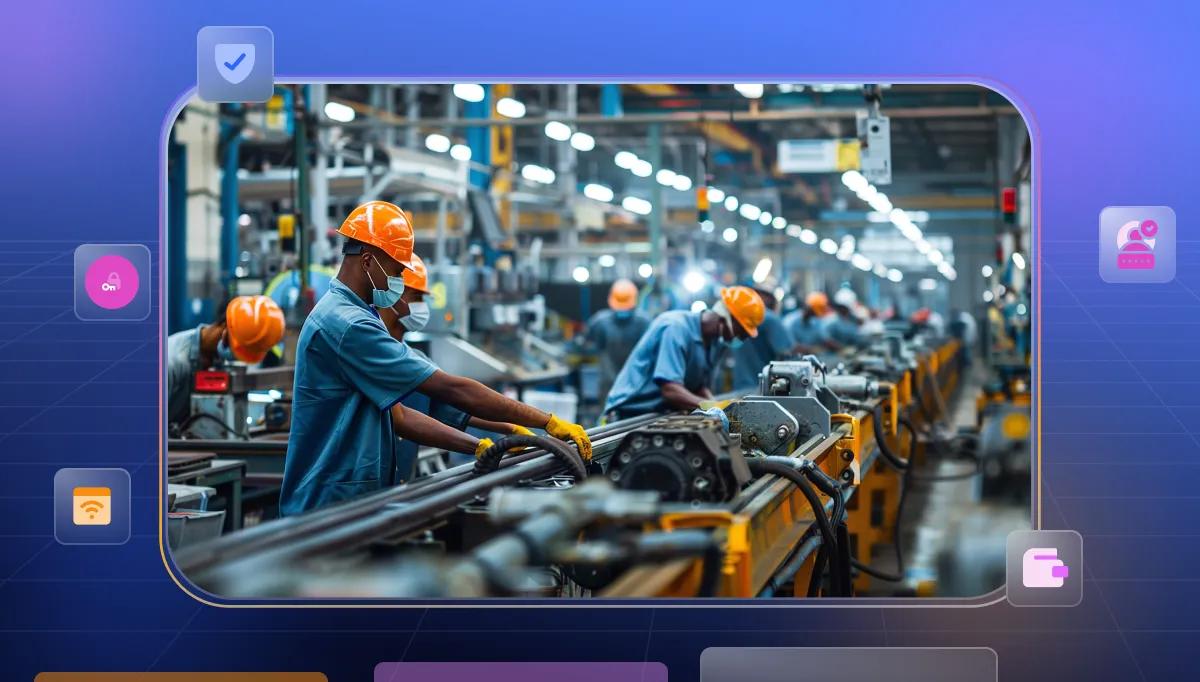

On most factory floors people share systems because work cannot stop between shifts. One operator finishes and another continues on the same machine. It feels normal. But a shared workstation for a manufacturing plant creates problems when identity is not clear.
You cannot tell who made a change or who accessed what. Small mistakes become harder to trace. Over time this affects quality audits and daily operations in ways that are difficult to control.
Why Shared Workstations Are a Major Security Risk in Manufacturing
On a factory floor speed matters more than anything. People rotate across stations. Shifts overlap. Machines keep running. In this environment no one stops to think about logins. Systems stay signed in longer than they should. Credentials get passed during handovers. It feels efficient at the moment but it breaks control.
A shared workstation is not just a shared machine. It becomes a shared identity. And once identity becomes unclear, audit trails and accountability become unreliable.
Identity gets blurred
- No clear accountability. When multiple operators use the same login the system cannot tell who performed which action. If a parameter changes or a record is edited you cannot link it back to a person. That makes root cause analysis weak and often delayed.
- Credentials spread across shifts. Passwords do not stay private for long in production environments. They get shared during urgency. They get written near machines. Over time access becomes informal and uncontrolled which directly weakens manufacturing workstation security.
- Ownership disappears. When users know the system is shared they stop feeling responsible for actions. Decisions become casual. Risk awareness drops.
Unauthorized access becomes normal
- Open sessions on the floor. Workstations are often left logged in because logging out slows down the next operator. Anyone nearby can access the system without authentication. This includes people who are not supposed to use it.
- Access level misuse. Sometimes one account has higher permissions. That account starts getting reused for convenience. Now actions that require control are executed without proper checks.
- No session discipline. On a busy line no one tracks session time. Systems remain active across shifts. This increases the exposure window for misuse.
Errors turn into bigger risks
- Untracked operational mistakes. Wrong data entry or incorrect machine inputs can happen anytime. Without user level tracking you cannot isolate the source. The issue spreads before correction.
- Weak audit trails. Weak audit trails. When logs show shared usernames, audits lose meaning. You cannot prove who accessed what. This makes it difficult to meet compliance requirements in regulated manufacturing environments.
- Slow incident response. When something goes wrong teams spend time identifying the source instead of fixing the issue. That delay directly impacts production and quality.
Legacy systems make it worse
- Password dependent systems. Many manufacturing systems still rely only on passwords. They were not designed for shared usage patterns. This creates a structural gap.
- Limited modern authentication. Technologies like badge tap or biometric login are often missing. So teams rely on methods that are easy to bypass.
- Integration challenges. Legacy machines with IAM gaps and older systems were not built for modern identity protocols so connecting them with centralized identity platforms becomes difficult. Because of this companies continue using insecure setups instead of fixing the foundation.
Why Traditional Workstation Security Fails on the Factory Floor
Traditional workstation security looks structured and controlled when you see it in policy documents. But the moment it meets a real production line the cracks become visible. The factory floor runs on continuity and speed.
Operators move between machines. Tasks shift quickly. Systems are reused across people in a shared workstation for manufacturing plant environments. Security models that expect stability struggle in this kind of environment.
The real issue is not that controls are missing. The issue is that controls are designed for a different setting. When security does not align with how work actually happens it creates friction. And in manufacturing friction always loses against production pressure.
Identity models do not fit shared environments
- User to device mapping breaks. Traditional systems assume one user per workstation. On the floor a single terminal is used by multiple operators within hours. This breaks the basic assumption behind access control and makes identity unreliable.
- Session continuity issues. Systems often remain active across operator changes. The next user continues under the previous session without re authentication. This leads to incorrect user attribution in logs and operational records.
- Weak user verification. Password based login only validates access to a credential. It does not confirm the actual person using the system. Passwordless authentication helps ensure stronger identity assurance in manufacturing environments.
Security controls disrupt operational flow
- Authentication delays impact work. Repeated login requirements slow down access during active production. Operators prioritize task completion over security steps when under time pressure.
- Informal workarounds emerge. Teams start relying on shared credentials or pre logged sessions to avoid delays. These practices are not exceptions. They become normalized behavior across shifts.
- Loss of control discipline. When security feels like a blocker users disengage from it. Compliance becomes inconsistent and enforcement becomes difficult.
Password based security cannot scale on the floor
- Credential reuse across teams. Shared accounts or reused passwords become common to maintain speed. Over time access control becomes informal and difficult to manage.
- Physical exposure of passwords. It is common to find credentials written near workstations for convenience. This creates direct exposure in a high traffic environment.
- Audit integrity weakens. When multiple users operate under the same login the system cannot produce reliable audit trails. This affects compliance and incident investigation.
Legacy infrastructure limits modernization
- Outdated system capabilities. Many manufacturing applications were not built to support dynamic user environments. Their security models are rigid and difficult to adapt.
- Limited support for modern authentication. Advanced identity methods such as biometrics or badge based login are often not supported natively. This restricts implementation of stronger controls.
- Complex integration landscape. Manufacturing environments combine legacy and modern systems. Achieving consistent security across them requires significant effort which often delays upgrades.
Key Requirements to Secure Shared Workstations in Manufacturing
On a factory floor security only works when it fits the way people actually work. Operators move between machines. Shifts change quickly. Systems are reused all day in a shared workstation for manufacturing plant setup. If security slows them down they will bypass it without thinking twice.
Strong shared workstation security manufacturing is built on clarity and speed. The system should always know who is using it. And the user should never feel blocked while doing their job.
- Clear user identity. Every session should start with a real and verified user. Shared accounts remove accountability and make it impossible to trace actions during incidents or audits.
- Fast authentication. Access should take a few seconds. Operators should be able to sign in and continue work without delay. If login takes too long people will keep systems open or reuse credentials.
- Passwordless access. Passwords are difficult to manage securely on the factory floor because they are often shared or exposed. Methods like badge tap or biometrics tie access to the actual person and remove dependency on memory or notes.
- Role based access. Users should only get access required for their role. Operators should not have the same permissions as supervisors or engineers. This reduces risk from accidental or unauthorized changes.
- Automatic session control. Systems should lock or switch users automatically when idle or when a new user takes over. Relying on manual logout does not work in busy environments.
- Strong audit trail. Every action should be linked to a specific user with accurate timestamps. Logs should help teams quickly understand what happened without confusion.
- Works with existing systems. Security solutions must integrate with legacy machines and applications. If integration is difficult teams will fall back to insecure workarounds.
6 Practical Ways to Secure Shared Workstations in Manufacturing
On a production floor security cannot depend on ideal behavior. Operators move between tasks and systems remain in continuous use. If controls interrupt the flow of work they get bypassed in subtle ways.
That is why practical security in manufacturing focuses on reducing friction while still maintaining strong identity and access control.
The following approaches reflect how leading facilities improve shared workstation security manufacturing without slowing down operations or creating resistance among operators.
- Enforce individual user identity. Every workstation session should be tied to a specific operator even when devices are shared across shifts. When organizations move away from shared or generic accounts they gain clear visibility into user activity. This improves accountability and makes it easier to investigate issues without delay.
- Adopt passwordless authentication. Password based access does not hold up well in manufacturing environments where credentials are often reused or exposed. Many facilities are shifting to badge based or biometric authentication because it improves user verification and reduces login time while supporting additional controls where needed.
- Implement role based access control. Access should be limited to what each role requires. Operators should not have the same level of control as supervisors or engineers. When permissions are structured properly it reduces the risk of unintended changes and helps maintain process integrity.
- Enable automatic session management. Systems should automatically lock after inactivity and support fast user switching without requiring full logout cycles. This ensures that access is not left open while still allowing operators to move quickly between tasks.
- Strengthen audit and traceability. Every action performed on a workstation should be linked to a verified user with accurate timestamps. Strong audit trails support compliance requirements and allow teams to respond quickly when something goes wrong.
- Use factory compatible authentication methods. Authentication must work in real conditions where operators may be wearing gloves or working in restricted environments. Solutions that require additional devices or complex steps tend to fail in adoption. Methods that are simple and environment aware are more likely to be used consistently.
What an unsecured shared workstation can cost your facility
Most factory problems do not start as big failures. They begin with small unnoticed actions like a system staying logged in someone using another person’s access or a setting being changed without full understanding. Work continues as usual. But the risk has already entered the process.
Over time these small gaps begin to show their impact. Not as one big event but as repeated issues that slow down operations and reduce trust in systems.
- Unplanned downtime. When a wrong command or incorrect setup runs on a machine it does not always fail immediately. Sometimes it creates instability that shows up later in the shift. Teams then stop production to troubleshoot and reset.
- Batch rejection and rework. A small input mistake or unauthorized change in parameters can affect an entire batch. Quality teams then step in. Material gets rechecked. In some cases it gets scrapped. What looked like a small action turns into material loss and extra workload.
- Loss of traceability. When multiple people use the same login the system cannot tell who performed which action. During an audit or internal review you are left with incomplete answers. You know something went wrong but you cannot prove how or by whom.
- Unsafe actions on machines. Certain systems control critical operations. If access is not restricted properly someone can trigger actions without full awareness of impact. You may not see an incident every day but the risk keeps building in the background.
- Slow problem resolution. When identity is unclear teams spend more time asking questions than solving the issue. Who did this? When did it happen? Which shift was involved. This delay directly affects recovery time.
- Data misuse or exposure. Production systems often carry sensitive information like recipes or process settings. When access is shared more people than necessary can view or change that data. This increases the chance of misuse even if it is unintentional.
- Ongoing hidden losses. The biggest cost is not always visible in reports. It shows up as small inefficiencies. Repeated corrections. Extra supervision. Over time these small losses add up and reduce overall productivity.
Securing the factory floor starts with identity
At the end everything comes down to identity. The system must know who is using it at every moment. Without strong manufacturing identity management controls and policies become unreliable in real conditions.
On the factory floor identity cannot stay tied to the machine. It has to move with the worker. It has to be fast. It has to be accurate. And it has to work without slowing down production. Once identity is handled correctly most other security problems start getting solved in a natural way.
Identity driven security approach
- Access follows the user. Access follows the user. Instead of tying access to a workstation the system recognizes the operator directly. In mature implementations access can follow the user across machines which reduces dependency on static logins and confusion during shift changes.
- Fast and frictionless login. Operators should be able to access systems instantly using methods that fit the environment. Badge tap or biometric login allows quick entry without remembering credentials. Work continues without interruption while identity stays verified.
- Clear action traceability. Every action is linked to a real user in real time. Logs stay clean and reliable. When something goes wrong teams can quickly understand what happened and respond without delay.
- Consistent control across systems. Identity should work across multiple machines and applications without forcing different login methods. A unified approach reduces errors and improves adoption on the floor.
What the right solution enables
- Passwordless authentication. It reduces reliance on shared credentials and ensures only verified users can access systems. It improves user accountability and overall security.
- Seamless user switching. Allows operators to switch sessions quickly without logging out fully. This supports shared workstation environments without leaving systems exposed.
- Role based access enforcement. Automatically applies correct permissions based on the user role. This prevents unauthorized actions and keeps operations controlled.
- Real time audit visibility. Tracks every user action with accurate identity mapping. Helps in faster investigations and smoother compliance checks.
- Works with existing infrastructure. Integrates with legacy machines and current applications without requiring major changes. This makes adoption practical in manufacturing environments.
Improve identity control across your factory floor and remove shared access risks. See how a modern approach fits your workflow without slowing operations. Book a demo to explore a practical solution tailored for manufacturing.
FAQS
How can manufacturers eliminate shared passwords on factory floor workstations?
Manufacturers can remove shared passwords in a shared workstation for manufacturing plant environments by enforcing unique user identity and adopting badge or biometric login. When access becomes fast and personal operators stop relying on shared credentials naturally.
What types of authentication methods work best on factory floors?
Authentication methods that work best are badge based access and biometrics because they are fast and hands free. These methods fit real conditions and reduce delays during active production.
Are legacy systems a challenge when securing shared workstations?
Legacy systems create challenges because they depend on passwords and lack support for modern authentication. Integration becomes difficult so organizations often continue with weak controls unless upgrades are planned carefully.


