


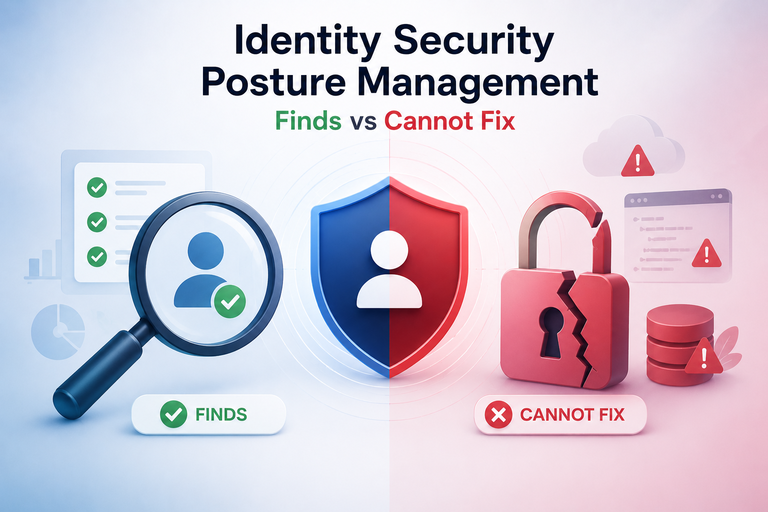

Many people think security is just about having the right software. That is only half the story. If your internal processes are broken a shiny new tool will just show you more problems than you can handle. You have to fix the way things work internally first. This means clear rules on who owns which account and a simple way to offboard people when they leave. When you get these basics right you stop fighting fires and start building a system that actually works.
Login issues do not disappear overnight but using identity security posture management acts like checking your front door locks before someone tries to walk in.
What Identity Security Posture Management Actually Does
Managing cloud security permissions gets messy fast when you do not know who holds the keys and old yearly reviews fail because access rights drift out of place every single day. A tool built for identity posture management steps in right then to act as a live health monitor for your entire system.
It scans your cloud setup instantly to catch human users and automated service accounts before hidden risks turn into actual problems.
- Tracking broad access. You need to figure out if an account holds way more power than its actual job requires and the system pulls data from your tools to spot weak security settings. This helps you protect your identity attack surface and close open doors before an attacker finds them.
- Smart fix priorities. Your team should not waste hours guessing what to patch first when alert dashboards blow up because the platform filters out the noise to hand you a clean list of urgent risks.
- Enforcing strict limits. Keeping permissions tight is tough as systems grow over time but the tool points right to the exact spots where an account can do too much. You can shut that extra access down cleanly and stop potential breaches early.
Why Four Categories All Claim This Job
Choosing security tools gets confusing because four different software types claim to fix the exact same problem while every company tries to sell you more than you need.
One system handles user setups while another locks down master keys and a third watches for active break-ins. On top of that you have cloud permission tools adding to the mix so you end up with a crowded market where everyone promises you the world.
- Tracking broad access. You jump between four separate screens because every tool only watches its own small corner. Bringing in smart identity lifecycle automation helps connect these systems so you stop wasting time manually fixing broken data.
- Smart fix priorities. Your team loses precious hours trying to link signals across separate apps just because companies want to grow their sales. A single unified view pulls everything under one roof to mix those signals into one clear score so you stop buying extra software.
- Enforcing strict limits. Managing who gets to see what cuts across every single department and needs a clear plan. Having true visibility means you finally understand your actual risks across all your tools without drowning in messy tech.
What Posture Debt Looks Like in a Real Environment
Your tech setup picks up junk over time just like an old house fills up with stuff you never throw away. Old accounts from people who left the company stay active because nobody bothered to close them. Workers collect extra keys as they switch teams while keeping all their old permissions from past jobs.
- Tracking broad access. You end up with thousands of automated scripts holding master keys that nobody dares to touch because you are scared of breaking the system. This mess makes your whole digital setup weak and lets hackers move around easily without getting caught.
- Smart fix priorities. Your security crew gets totally lost trying to figure out who belongs where because the logs are buried under a mountain of forgotten files. It makes setting up strict security rules nearly impossible since nobody knows what the normal clean state actually looks like.
- Enforcing strict limits. Every new app you plug into the network adds more weight to this hidden pile of mess making your system harder to protect every single day. Cleaning house early stops you from drowning in old risks you forgot existed.
The Number That Should Worry You Is Not the Finding Count
Seeing ten thousand warnings looks scary on your project dashboard. That big number is mostly just empty noise. Chasing every tiny mistake wastes your time on things that do not break your app.
- Tracking broad access. You need to watch open paths leading to your core files. One bad setting on a main login is worse than a thousand small rule breaks. Think of an old test account in your user management project having full admin power over your database.
- Smart fix priorities. Fixing everything at once ruins your daily workflow. Putting your limited hours toward the biggest dangers builds real strength. Patch a critical security hole in your payment project before fixing a harmless button color issue in your settings menu.
- Enforcing strict limits. Leaders must accept you cannot stop every single risk. Keeping the worst paths locked down tight protects your business. Disable an old forgotten API key in your e-commerce project that still touches user data instead of chasing twenty low-priority code warnings.
Where Posture Debt Is Actually Manufactured
Posture debt does not come from bad intentions. The speed of business builds it up every single day. Developers make test accounts that stay active forever. Teams give temporary keys during an emergency and forget to take them back.
- Tracking broad access. Manual employee offboarding leaves former worker profiles running wild. Other departments buy random software tools without telling IT which creates hidden blind spots across the whole company.
- Smart fix priorities. Speed always beats safety when teams rush to ship new features under tight deadlines. Taking the easy shortcut piles up hidden risks until your whole system becomes heavy and hard to manage.
- Enforcing strict limits. Better scanners will not fix this problem on their own. Security must fit smoothly right inside your daily developer workflows so convenience never wins over safety again.
Findings Nobody Is Allowed to Close
Some security alerts sit open forever because old legacy apps or vital business software cannot be changed easily. An ancient server might need weak login rules or a core program might require heavy admin rights just to run.
- Tracking broad access. When you cannot fix the root problem your goal shifts completely. You must wrap the risky asset in extra safety layers like tight network limits or strict monitoring tools, including Identity Threat Detection and Response.
- Smart fix priorities. Treating these permanent dangers as watched exceptions keeps attackers from finding easy blind spots. You build a strong fence around the weak spot so damage stays trapped inside.
- Enforcing strict limits. Mature teams admit they cannot fix everything so they focus on smart containment instead. Clear talks with business leaders make sure everyone agrees on the accepted risk.
How to Evaluate an ISPM Tool Without Buying a Second Dashboard
Buying another security platform just creates more noise that nobody checks. Testing an ISPM tool means looking at how well it connects with your current setup instead of counting fancy features.
Seamless Integration Capabilities
Your new platform should pull data right from your existing IAM and cloud apps without months of setup pain.
- Smart fix priorities. It needs to give you clear steps to fix problems without crashing your live app. This saves your team countless hours of manual troubleshooting.
- Enforcing strict limits. The tool must know the difference between a test environment and a live production server. Smart context prevents false alarms on unimportant sandbox files.
Operational Workflow Alignment
The software should drop right into your current ticketing systems instead of forcing your team to learn a brand-new dashboard.
- Tracking broad access. It has to use APIs to match how your developers already work every single day. Smooth automation keeps everyone moving forward without slowing down production.
- Smart fix priorities. True value comes from making security a normal part of daily operations rather than extra work for your engineers. Built-in habits protect your systems far better than forced external rules.
What Has to Be True for Findings to Stay Closed
Fixing a security problem means nothing if the same issue pops right back up on your dashboard next month. Automated scripts or admins often undo your manual fixes without realizing it.
Automated Guardrail Enforcement
Your system needs automated guardrails to stop configuration drift before it ruins your setup. This feedback loop detects changes instantly and reverts them back to the approved baseline.
- Tracking broad access. Manual cleanup is way too slow for a fast-moving cloud environment where things change every second. Reliable automation keeps your core settings locked down tight without requiring constant human oversight.
- Smart fix priorities. Letting a tool enforce your rules turns security into a living part of your infrastructure. Proactive systems work quietly in the background so your team can focus on harder challenges.
Sustainable Posture Management
Setting a high standard requires code-based policies that work even when nobody is watching. True stability stops you from getting stuck in an endless reactive cleanup cycle.
- Enforcing strict limits. Automated enforcement bridges the gap between fast deployments and strict security rules. Quality guardrails ensure your infrastructure stays safe while your business keeps growing.
- Smart fix priorities. Letting a tool enforce your rules turns security into a living part of your infrastructure. Proactive systems work in the background so your team can focus on harder challenges within your identity and access management framework.
Fix the Source Before You Buy the Scanner
Buying a high-end tool to fix a broken identity process is like buying an expensive thermometer to cure a fever. If your system for granting and revoking access is messy, your new tool will just drown you in endless noise even if you try to use ITDR to manage the symptoms.
Fix the Foundation First
Before you buy any software, you must audit your internal processes to see where the gaps are.
Are your HR systems sending out bad data? Is there a clear owner for every service account? If you fix these human-led problems, your security tools become much more powerful.
Trying to use software to hide your mess only leads to a very busy and expensive dashboard. Most big security problems are actually process issues that technology just makes worse. You should build a strong digital foundation that can handle change instead of relying on a tool to do the governance work for you.
Infisign UniFed for Unified Identity
To get your identity processes under control, Infisign UniFed acts as the intelligent layer that connects your workforce and customer identities under one roof. By replacing broken manual workflows with automated AI-driven governance, it ensures that security is baked into your infrastructure from the very start.
- Infisign UniFed provides automated lifecycle management that handles joiners, movers, and leavers across 6,000+ apps, ensuring that no orphaned accounts are left behind to create security gaps.
- The platform features AI-powered access control and passwordless authentication using biometrics or magic links which eliminates the primary target for attackers' stolen passwords while simplifying the user experience.
- It enables Just-in-Time access and adaptive MFA that adjusts based on real-time risk, ensuring that users only have the access they need exactly when they need it, turning your security into a proactive, compliant system.
Stop relying on tools to fix broken manual processes. Build a solid foundation first and automate your identity lifecycle to stop the noise. See how your systems can run securely on autopilot—book your demo today.
FAQ
What exactly is Identity Security Posture Management?
A. Think of it as a live health check for your digital access. It scans your systems to see who has permission to use your apps and data. Instead of just reacting to problems, it finds risky spots like forgotten accounts or extra permissions before they become security issues.
Why should my company prioritize this?
A. Most digital attacks happen because someone logged in with valid credentials that should have been revoked. If your internal rules are messy, it is easy for intruders to move around unnoticed. Proper identity management makes it much harder for unauthorized users to gain a foothold in your network.
We already have security software. Why do we need more?
A. Tools alone cannot fix broken processes. If you do not have clear rules for who owns an account or how to remove access when someone leaves, a new tool will just show you too many warnings to manage. You must fix the process first, then use automation to maintain that clean state.
What are the biggest risks of ignoring identity management?
A. The biggest risks are orphan accounts belonging to former employees and privilege creep where staff keep access they no longer need for their current roles. These create a massive hidden target that allows attackers to steal data without being caught.
How does automation help my IT team?
A. Automation removes the manual work that burns out your engineers. Instead of chasing alerts or updating permissions every time someone changes jobs, an automated system ensures access is always accurate. This allows your team to focus on growing the business rather than constantly fixing access errors.


