


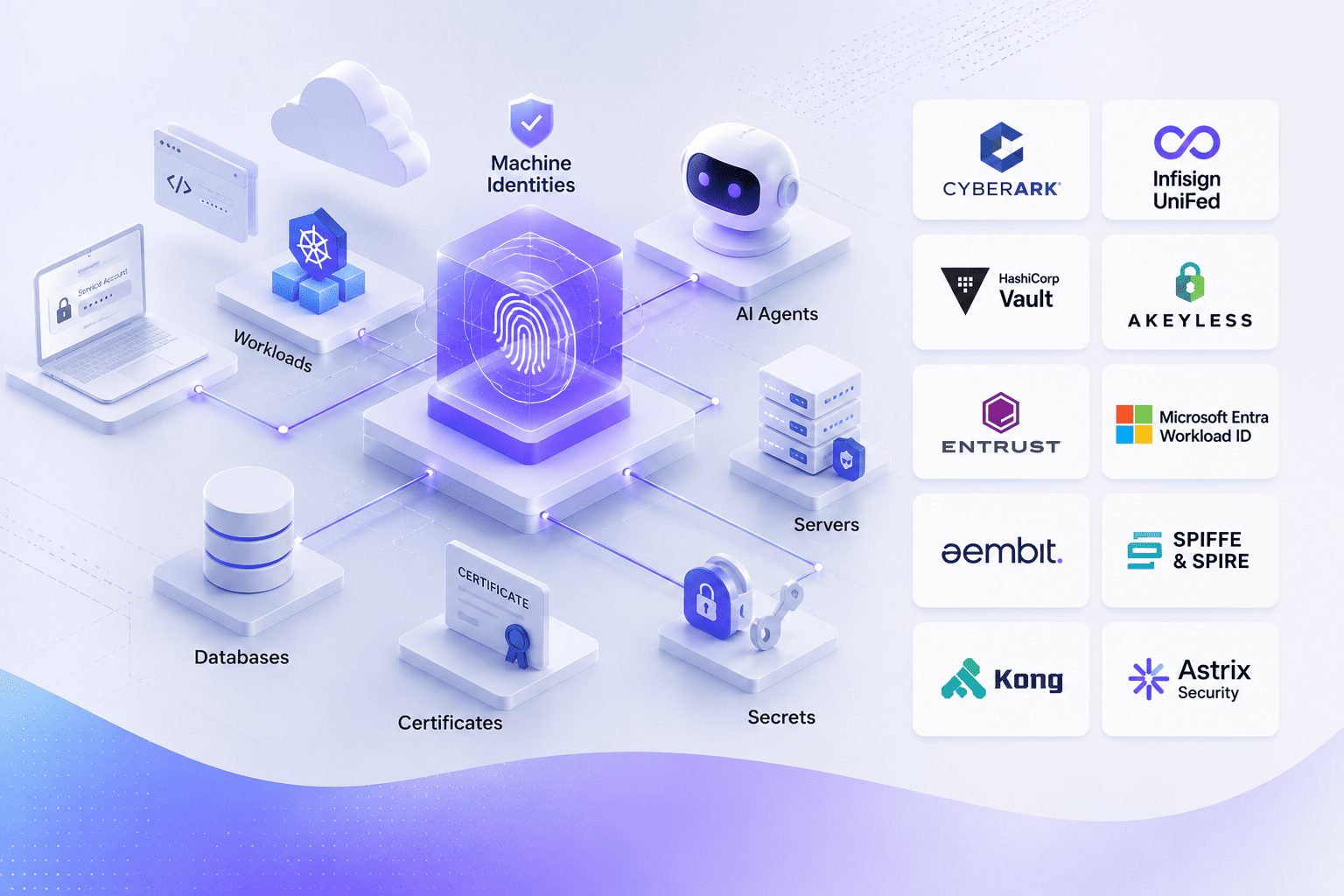

Automation has spread across every corner of your network and created a web of digital access that traditional security just cannot handle anymore. Many machine identities such as service accounts, workloads and automation scripts have privileged access. This makes effective machine identity management essential to reduce security risks and keep your business locked down tight without causing any friction for your engineering teams.
Why Non-Human Identities Became the Bigger Problem
In many modern organizations, machine identities, such as service accounts, workloads, APIs, and automation tools, now outnumber human identities. These digital workers need access to do their jobs every single day. Keeping track of who has what access is getting out of hand, and this makes non human identity management a huge priority right now.
- High Level Access. Many of these digital parts have admin rights so if one gets hacked everything is at risk. Machine identity management tools help reduce the risk of unauthorized access by securing and governing machine credentials throughout their lifecycle.
- Background Connections. Applications frequently communicate with one another through APIs and services making visibility into these interactions important for security and governance. You need a way to see all these connections so nothing bad happens while you are sleeping.
How We Evaluated These Tools
We looked at many options to see what actually works in the real world for regular teams. A good platform should be easy to deploy, manage and integrate with existing infrastructure while minimizing operational complexity. Our goal was to find the best machine identity management tools that solve the problem without slowing down your developers.
- Ease of Use. The software must be easy to learn so your team does not waste time reading long manuals. If a tool is too hard people just find workarounds and that defeats the whole purpose.
- Safe Storage. Machine identity management should secure secrets, certificates, workload identities, service accounts, SSH keys, and other non-human credentials throughout their lifecycle. These tools make sure your sensitive data stays out of the hands of people who should not see it.
- Fast Setup. You need things running right away without breaking the systems you already built.
The Best Non-Human and Machine Identity Management Tools
Finding the right software does not have to be hard. We listed top options including great converged human machine identity management tools to keep your entire system safe and secure.
1 CyberArk
CyberArk is a massive player in the enterprise security space right now. They recently bought Venafi to handle certificates and they use Conjur for application access control.
Key Features
- Centralized Hub. You can easily manage access across Amazon Web Services Google Cloud and Microsoft Azure.
- Certificate Management. They take full control of your certificates to stop random server outages.
Pros
- Covers every single type of machine identity you might have in your stack.
- Fits perfectly into large enterprise setups with complex security needs.
Cons
- The setup process can be very heavy and slow for smaller engineering teams.
- Pricing is usually aimed at massive companies with large security budgets.
2 Infisign UniFed
Infisign brings human and machine access together into one single platform. This stops the crazy mess of having identity keys scattered all over your servers.
Key Features
- Passwordless Access. It completely removes the need for passwords by using strict zero trust rules.
- Single Sign On. You can log into all your cloud tools and local environments with just one click. It makes the access process super fast while keeping bad actors out.
- Smart Automation. The platform automatically gives and takes away access when things change in your environment.
Pros
- Very easy to customize and fit right into your current software setup.
- Does a great job of merging human and bot identities into one view.
Cons
- Might lack a few niche features that older legacy platforms offer.
- Still growing compared to the massive corporate giants in the industry.
3 HashiCorp Vault
HashiCorp Vault is extremely popular with developers building modern cloud infrastructure. It helps you store and tightly control access to passwords tokens and certificates.
Key Features
- Temporary Keys. It creates keys that only work for a short time and then immediately expire. If a hacker manages to steal a key it becomes totally useless very quickly.
- Data Encryption. Your applications can use Vault to encrypt their data without developers writing custom security code.
- Centralized Control. It completely stops key sprawl by keeping everything in one heavily guarded place. You get a very clean interface to manage access across all your servers.
Pros
- Incredible for automation and getting rid of dangerous hardcoded passwords.
- Loved by developers because the open source options are very flexible.
Cons
- The initial setup process is known to be very complicated and technical.
- You will find the official documentation a bit too broad sometimes.
4 Akeyless
Akeyless runs as a service in the cloud and handles all your passwords without heavy local software. It is extremely fast to deploy and removes the pain of managing massive server clusters yourself.
Key Features
- Zero Knowledge Architecture. They built the system so they cannot see any of your encryption keys at all. You keep absolute ownership and control of your data at all times.
- Stateless Cloud Design. There are no heavy vault clusters for your engineering team to build or maintain. The system automatically scales up as your business gets bigger.
- Just In Time Access. It hands out credentials exactly when they are needed and never a second earlier.
Pros
- Extremely easy to use and very quick to get running in production.
- Security features are top notch and keep everything locked down tight.
Cons
- The user interface can sometimes feel a bit clunky to navigate.
- Advanced network setups can get tricky and might require support help.
5 Entrust
Entrust is heavily focused on establishing absolute trust between all your communicating devices. They do an amazing job keeping the certificates that your servers use completely safe and updated.
Key Features
- High Assurance Certificates. They provide trusted certificates to guarantee every machine communicates securely.
- Hardware Security. They offer physical hardware modules to keep your encryption keys locked down tight.
- Code Signing. They let you verify that your software has not been altered by bad actors before it runs.
Pros
- Very strong focus on physical hardware security for your encryption keys.
- Great for managing massive numbers of certificates across multiple setups.
Cons
- Can be way too complex for smaller businesses to run efficiently.
- Setting up custom rules sometimes hits frustrating technical limits.
6 Microsoft Entra Workload ID
If you already run your entire business on Azure and Windows this is the obvious choice. It connects directly into your existing Microsoft setup to control all your service accounts.
Key Features
- Conditional Access. You can set strict rules so an app can only log in from specific places or approved devices.
- Identity Protection. It uses smart systems to watch exactly how your bots log in and flags anything unusual. It automatically blocks access if the system detects a high risk action.
- Lifecycle Management. It shows you exactly which service accounts are active and which ones are just sitting there.
Pros
- Perfect fit if you already rely heavily on Microsoft tools everywhere.
- Has really smart built in tools to spot strange automated bot behavior.
Cons
- Not the best choice if you use a ton of non Microsoft systems.
- The main admin center has so many options it can feel very overwhelming.
7 Aembit
Aembit is specifically built to stop developers from hardcoding passwords into their applications. It lets your apps and AI agents talk to each other safely using smart verifiable identities.
Key Features
- Access Instead of Keys. It grants access based on what the application actually is instead of handing out permanent passwords.
- Short Lived Credentials. It injects a temporary key right when the app needs to do its job. After the task is done the key disappears completely from the system.
- Conditional Policy Rules. You can set rules so an app only works if its environment looks completely safe.
Pros
- Completely eliminates the need to store static passwords anywhere in your code.
- Handles the strange behavior of modern AI agents very effectively.
Cons
- The concept of keyless access is a major mindset change for some teams.
- Setting up the initial trust providers can be tricky for total beginners.
8 SPIFFE and SPIRE
SPIFFE and SPIRE are open source projects built specifically for massive cloud environments. They ensure every piece of software gets a verified identity instead of relying on a shared password.
Key Features
- Attestation Based Identity. They look at the actual physical environment to verify an app before giving it access.
- Short Lived Documents. It hands out tiny identity documents that expire in just a few minutes. If a hacker somehow grabs one it becomes totally useless before they can even act.
- No Master Key Problem. Traditional security tools need a main password to boot up which creates a huge vulnerability.
Pros
- Completely removes dangerous static keys from your entire cloud system.
- Highly respected and heavily backed by massive open source communities.
Cons
- Taking the time to properly learn and set it up is a major technical challenge.
- You have to run patches and manage the identity servers entirely yourself.
9 Kong
Kong acts as a massive high speed traffic cop for your web connections. It makes sure that applications talking to each other through APIs are doing it safely and efficiently.
Key Features
- API Gateway Control. It handles all the connections between your web services very smoothly.
- Rate Limiting. You can set strict rules to stop an application from asking for too much data at once.
- Plugin Support. You can add extra features like security logging and data caching whenever you need them.
Pros
- Extremely fast and easily handles millions of network requests without breaking.
- Very customizable because it is built on a strong open source foundation.
Cons
- The documentation can be confusing when you want to write custom plugins.
- Adding some of the extra security features requires a steep technical learning curve.
10 Astrix Security
Astrix is amazing at finding exactly what third party tools are hooked into your business. It acts as an overwatch to ensure automated systems and outside integrations are not doing anything shady.
Key Features
- Exposure Detection. It highlights any service account that has way more access than it actually uses daily.
- Deep Visibility. It continuously scans all your cloud applications to find connections you did not even know existed.
- Behavioral Analysis. It watches how bots act in real time and immediately flags anything weird.
Pros
- Incredible at mapping out complex cloud to cloud software connections.
- Very quick to spot overprivileged applications and lock them down safely.
Cons
- Mostly focused on cloud applications rather than deep internal developer code.
- Setting up custom security rules for older legacy systems can be a tough job.
11 Oasis Security
Oasis Security is built to help you figure out exactly who and what has access to your systems. It cleans up the giant mess of unmanaged service accounts sitting in your environment.
Key Features
- Full Discovery. It finds every single bot and service account running in your background automatically.
- Risk Assessment. The platform looks at what these accounts are doing and flags the dangerous ones instantly.
- Lifecycle Cleanup. It helps you safely delete old accounts that nobody uses anymore without breaking your apps.
Pros
- Amazing at finding completely forgotten service accounts hiding in your servers.
- Gives very clear risk scores so you know exactly what to fix immediately.
Cons
- It is a newer player so it might lack integrations with very old software.
- You have to spend some time setting up the initial rules for your specific business.
12 Token Security
Token Security takes a very modern approach to keeping your development pipelines completely safe. It looks directly at how your developers build software to make sure no keys are left out in the open.
Key Features
- Code Scanning. It reads your source code looking for passwords that developers might have typed by mistake.
- Developer Friendly. It integrates right into the tools your engineering team already uses every single day.
- Inventory Tracking. It builds a complete list of every access token flying around your cloud environment.
Pros
- Catches security mistakes exactly where they start in the actual source code.
- Developers love it because it does not force them to change how they work.
Cons
- Focuses mainly on developer tokens and less on physical server identities.
- You need to have modern development practices for it to be truly useful.
How to Choose the Right NHI Tool for Your Stack
Finding the right fit for your setup does not have to be a headache. You want to pick the best tools for managing machine identities that actually make your life easier. Make sure you focus on what your team needs right now without getting distracted by extra stuff.
- Current Setup Check. Look at the software you already use every day and find a tool that fits right in. You do not want to force your developers to change how they work just to add some security.
- Ease of Use. The platform has to be simple enough that your security team actually enjoys using it. If the tool is too complicated people will just find dangerous shortcuts to get their jobs done.
- Future Growth. Pick a system that can handle way more bots and apps than you currently have.
Secure Non-Human Identities Before They Outnumber Your Controls
We just looked at how fast bots apps and automated scripts are taking over the daily work. They outnumber your actual human workers by a lot. Every single one of these digital workers holds keys and access passes to your most private data.
If you leave them unmanaged, bad actors will easily walk right into your servers. Taking control of this mess is not just a nice idea anymore. It is exactly what keeps your business safe. You absolutely need a solid system in place before these automated accounts become too big to handle.
This brings us to Infisign UniFed. When you look at the big picture, keeping human access and bot access in two different places just creates more work. Infisign handles both sides on a single platform so you never lose track of who or what is inside your system.
It naturally solves the exact problems we talked about without making your security team pull their hair out.
- Zero Trust Access. It completely removes the need for permanent passwords. Your apps and bots get access only when they actually need it and then the access disappears.
- Unified View. You get one clear screen to watch every single digital and human worker. You finally stop guessing what your scripts are doing in the background.
- Automated Control. The system automatically cleans up old accounts and unused keys. Your developers keep building great things while the platform does the hard work of keeping things secure.
Don’t wait for an identity breach to find the gaps in your stack. Schedule a demo now to see why CTOs choose Infisign to govern their growing number of machine identities.
FAQ
1: What is non-human identity management?
It is the process of keeping track of access rights for bots, apps servers and AI agents. It ensures these digital workers only access what they need.
2: What is the difference between human and non-human identities?
Human identities are for actual people logging in. The other type is for software scripts and devices that run automatically without a person typing a password.
3: What features should you look for in a non-human identity management tool?
You want visibility so you can see everything in one place. You also want automatic rotation for passwords and keys. It should also alert you if a bot acts weird.
4: Why is non-human identity management important in 2026?
Because automation and AI are everywhere now. We have more digital workers than human workers and hackers know that targeting bots is an easy way to break into systems.


