


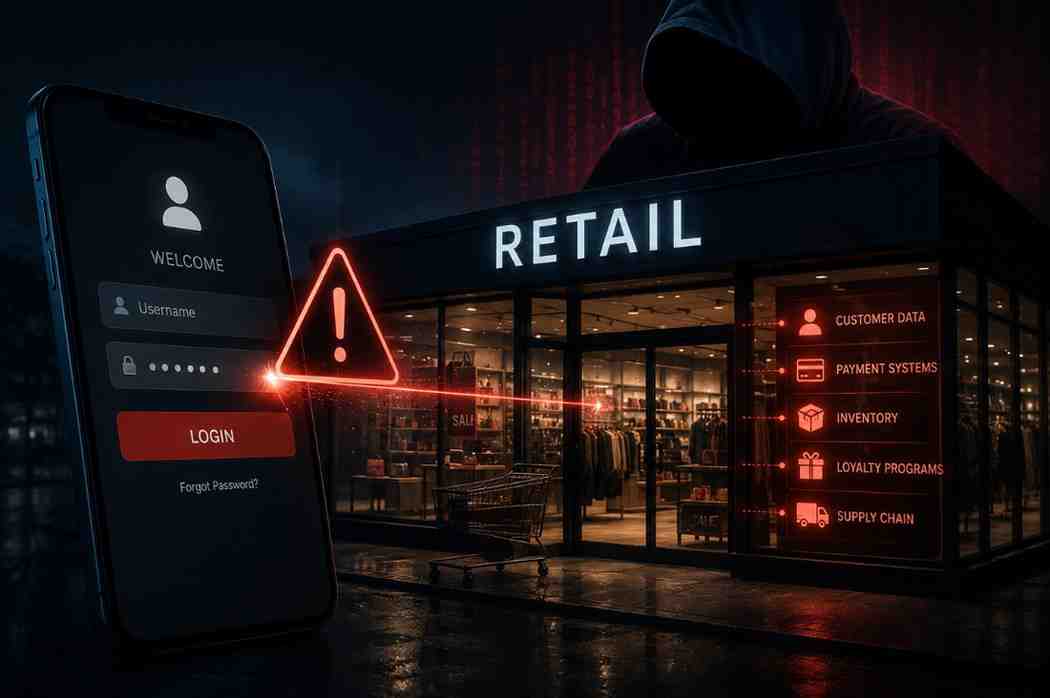

Retail stores focus on strong walls while leaving inside doors wide open. The 2026 Verizon Data Breach Investigations Report shows that many retail attacks now begin with stolen or compromised credentials. A retail cyberattack starts when someone uses these stolen keys to enter as a guest. Stop trusting a login just because it looks right.
Real safety means checking every person at every step inside your network. When you monitor who enters your house you keep your assets safe from those who do not belong there. Staying alert protects your future.
What the Latest Retail Cyberattacks Actually Have in Common
Attackers follow predictable patterns because stealing credentials is faster than complex hacking. With compromised credentials driving 61% of breaches, criminals easily pose as legitimate users. These attacks often result in an average global cost of USD 4.44 million per breach.
Every major breach today shares the goal of moving quietly using valid credentials to act like a real user. Keeping your systems safe means watching for the specific signs that these identity thieves leave behind as they move through your network.
- The Credential Hook. Many attacks start by compromising a valid login to establish an initial foothold. Once an attacker holds a username and password they stop looking like an external threat and start acting like a regular employee to compromise retail network security.
- Lateral Movement. Once inside, they waste no time in mapping your network to find high-value targets. They jump from one account to another to gain deeper control over payment systems and customer databases while staying invisible to your standard security tools.
- The Exit Strategy. Their goal is often to scrape data or plant ransomware before they get caught. They prioritize speed and quiet action making it vital to spot their footprint before they finish their objective.
Why Retail Is Such an Easy Target for Identity Based Attacks
Retail environments face huge pressure because they manage massive databases of customer info alongside complex store systems. Attackers love this sector because the sheer volume of logins makes spotting a fake user difficult for teams relying on manual review. Protecting your cyber security threats in retail setup requires looking at how identity management handles such heavy traffic.
Seasonal Staff, Constant Churn
High turnover rates in retail create a messy environment for managing user access. Managers often rush to give temporary staff network permissions without setting strict limits. Attackers scan for these accounts because they know these users usually lack proper security training or long-term oversight.
- Rapid Access. Temporary workers get wide access to speed up their work which leaves holes in your defense. Hackers use these shortcuts to enter your systems while looking like regular seasonal help.
- Forgotten Accounts. Stores often fail to delete temporary logins once the busy season ends. An attacker finds these old accounts to gain a permanent foothold inside your private network.
A Sprawling Third Party Ecosystem
Retailers rely on many outside vendors to keep apps and stores running smoothly. Each vendor link creates a new path for hackers to exploit your retail cyber security defenses. Managing these external connections is hard because you cannot always control their internal security practices.
Industry experts admit that security is only as strong as its weakest link. You must realize that your partners create your risks. Never wait for a breach to take action.
Industry experts say that your defense relies heavily on your vendor network.
- Vendor Risks. External companies often have deep access to your systems for maintenance tasks. A breach at a small vendor gives attackers a direct path into your main server environment.
- Weak Links. Many partners follow poor security rules which makes their login info easy to steal. Once hackers take over a vendor account they pose as a trusted partner to bypass your primary login gates.
Customer Accounts Worth Stealing
Every shopper profile holds value to criminals who sell that data on the dark web. High-profile stores become prime spots for cybersecurity in retail breaches because they store payment info and personal contact records. Protecting these accounts is tough when users choose weak passwords that hackers crack in minutes.
- Data Value. Criminals target customer databases to steal gift card balances and loyalty points. They turn these stolen rewards into quick cash without needing to breach a bank.
- Credential Stuffing. Attackers use bots to try thousands of stolen passwords on your site at once. A few matches happen every time which gives them full access to active customer accounts.
No Tolerance for Downtime
Retailers operate on thin margins and cannot afford to stop sales for even a few minutes. This need for constant uptime makes it hard to push security updates or block suspicious logins during peak hours. Attackers time their cyber security retail strikes when they know you are too busy to verify every single login request.
- Pressure to Perform. Security teams hesitate to lock accounts because they worry about blocking real shoppers. Attackers rely on this fear to keep their malicious sessions running during busy sales events.
- System Lag. Overloaded servers make it tough to monitor traffic in real time. Hackers move through your system during these heavy periods because they know your team is busy fixing performance issues.
The Identity Gaps Attackers Exploit and How to Close Each One
Retailers often focus on building strong outer walls but forget to check how people get inside. A retail cyberattack thrives when simple gaps in your identity system stay open for too long. You need to verify every user at every step to stop these intruders from moving freely. Closing these gaps is how you take back control of your own network.
Most security gaps stay hidden until things go wrong. As one director notes, you should check your systems for login and backup issues now before these small holes turn into real problems.
- Password Hygiene. Many staff members use the same login for multiple sites which makes it easy for hackers to guess their entry code. You should force the use of unique passwords across all systems. Adding a second layer of verification provides much better protection for your staff accounts.
- Manual Lifecycle Management. Some stores still handle new hires and exits through spreadsheets. This slow method leaves former employees with active access long after they leave the company. Switching to an automated system ensures that access rights disappear the moment a person leaves their post.
- Excessive Admin Rights. Too many users often have full power over the entire network because management wants to avoid extra work. This setup means one stolen account grants the attacker total control over every system. You must limit access rights so that people only reach the data they need for their daily tasks.
- Lack of Session Monitoring. You might verify a user at login but then stop watching what they do next. Hackers use this silence to move sideways through your systems once they bypass the front gate. Continuous monitoring tools help you spot odd behavior in real time so you can shut down threats before they spread.
What to Audit in Your Retail Identity Defenses Before Peak Season
Peak seasons put your systems under extreme stress when volume spikes and teams scramble to keep up. Now is the time to verify that every login process stands firm against heavy pressure. Use these checks to lock down your environment before the next rush hits.
When You Onboard Seasonal Staff
Temporary hires often get generic logins to speed up training which creates massive blind spots. You need to ensure every new face has a unique account with strict time limits.
- Account Expiration. Set every seasonal account to self-destruct once their contract date hits. This prevents old logins from sitting in your system as an open door for bad actors.
- Role-Based Limits. Grant only the bare minimum access needed for their specific role. A floor worker should never have the same digital keys as a store manager.
When a Vendor Gets Network Access
Outside partners often keep permanent access to your systems even after their specific project finishes. Review these connections now to remove any vendor that no longer needs a way into your private data.
- Periodic Re-certification. It is best to ask vendors to prove they still need access every 30 days. While standard rules like PCI DSS require this at least every six months as a baseline, a monthly check keeps you much safer. If they cannot explain why they still need access, cut the connection right away.
- Secure Gateways. Force all external partners through a single secure portal that logs every move they make. This keeps their actions separate from your core internal traffic.
When You Launch a New Store or App
New launches often prioritize speed over security which leaves doors wide open for hackers. You must treat every new endpoint as a fresh target that requires a full identity audit before it goes live.
- Unified Identity. Connect every new app to your master identity system to ensure consistent rules apply everywhere. Never let a new platform run on its own disconnected login database.
- Stress Testing. Run simulated login attacks against the new setup to see if your monitoring tools catch the movement. If you cannot see the traffic then you are not ready for the public.
When Someone Leaves
Staff turnover is high in retail and failing to revoke access instantly is a major mistake. You must automate the exit process to ensure that no digital trail stays active once an employee walks out the door.
- Instant Revocation. Link your human resources software directly to your security platform to trigger an immediate lockout. Waiting until the end of the week is far too late to stop a disgruntled former worker.
- Audit Trails. Check your logs for any activity linked to accounts that should have been closed already. This helps you find and patch holes in your offboarding process before a real breach happens.
hat a Retail Ready Identity Platform Has to Do
A platform built for retail must handle huge traffic spikes without breaking a sweat while keeping bad actors out. Speed is the priority for sales, but security cannot take a back seat even during the busiest hours. Your identity tool needs to process every login request quickly so your business keeps running without any interruption.
- Dynamic Threat Detection. The system must watch for odd behavior that standard tools miss. It should notice if a user logs in from two different countries in one hour or if a password change happens at an unusual time. Stopping these moves in real time prevents a stolen login from turning into a total data loss.
- Seamless User Experience. Retailers lose sales if the login process feels too heavy or slow for the shopper. A great platform keeps things fast for real customers while making life extremely hard for bots. Balancing strong checks with a smooth flow ensures your revenue grows without adding risk.
- Unified Visibility. You need one single screen that shows every login event across your online store and physical shop network. Trying to patch together reports from different systems leaves dangerous gaps where attackers hide. Having a clear view of all identity traffic allows your team to act fast when a problem appears.
- Automated Response. The platform should block suspicious accounts on its own without needing a human to click a button. Relying on manual review takes too long when an attack moves at machine speed. Automation allows your security to scale up instantly as your traffic levels climb during a big holiday sale.
Retail Cyberattacks Are an Identity Problem. Close the Gap Before the Next Wave
Retail businesses often invest heavily in perimeter security while ignoring the fundamental flaw that most modern breaches rely on stolen user credentials. Attackers no longer need to break through firewalls when they can simply walk through the front door using verified login tokens.
Securing your environment now requires moving past basic password systems toward a model where every access request faces constant validation. Closing these identity gaps is the only way to prevent attackers from moving through your network unnoticed.
Infisign UniFed connects all your scattered login systems into one secure platform. It helps retail businesses grow fast while staying safe by keeping login rules exactly the same across every store and cloud app.
- The platform applies Zero Trust principles by verifying every request and supports passwordless login via device passkeys and biometrics to make sure only the right people can access your systems.
- The system flags anomalies and blocks suspicious logins in real time, so threats are stopped instantly before they can spread.
- Centralized identity governance provides granular visibility into access privileges across your entire retail footprint so security teams maintain control without manual overhead.
- It connects directly with your HR system (HRIS) and directories via SCIM. This makes sure that temporary access for seasonal staff and vendors gets cut off the exact moment their contract ends.
Stop guessing where your identity gaps exist. See how Infisign UniFed secures your retail network in real-time. Schedule a technical demonstration today to walk through your infrastructure with our engineering team.
FAQ
Why do retail cyberattacks now start with a login instead of a network breach?
Stealing a password is much easier than breaking through strong firewalls. Criminals simply buy valid login details online and walk right in, pretending to be real employees to avoid alarms.
We already require MFA — isn't that enough to stop credential attacks?
Basic MFA is a good start, but attackers can bypass it using phishing links or spamming phone prompts until a user accidentally clicks approve. You need stronger, passwordless setups today.
How do we secure seasonal staff and third-party vendors without slowing down peak season?
Connect your identity tools directly to your HR systems. This way, accounts are created instantly when they get hired and shut off the exact day their work contract ends.
What should we audit in our identity defenses before peak season?
Check for inactive accounts, review who has high-level access, and test your system's ability to spot unusual login times. Make sure all vendor accounts have strict expiration dates set.


