


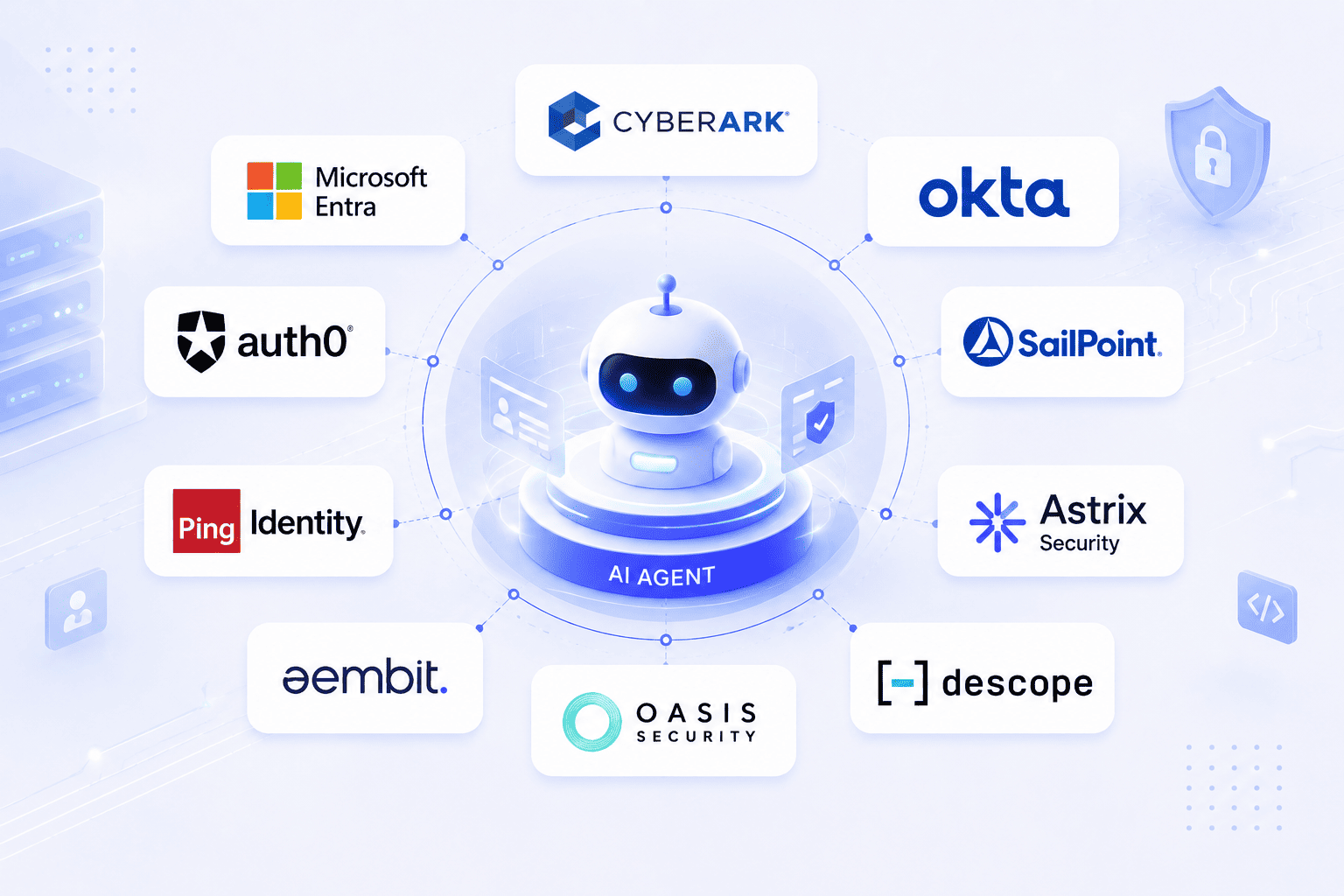

Enterprise security teams are facing a new challenge today. Many modern AI agents can autonomously complete tasks across multiple applications while traditional automation bots typically follow predefined workflows. Traditional systems just cannot keep up with this pace.
AI agent identity management is becoming an increasingly important focus for organizations adopting autonomous AI systems because these agents require secure authentication authorization and governance.
Assigning every AI agent a unique identity combined with strong authentication authorization, least privilege access and continuous monitoring helps reduce the risk of unauthorized access. It keeps your data locked down while letting your smart automation run smoothly.
Why AI Agents Broke Traditional Identity Management
Traditional identity tools were built for predictable humans and static scripts. Many modern AI agents can make autonomous decisions and interact with multiple applications when designed with the appropriate integrations. A modern strategy for ai agent identity management is essential in 2026.
- Unpredictable Behavior. Traditional identity systems were primarily designed for human users and predictable enterprise workflows rather than autonomous AI agents. AI agents operate at any time and move through systems in non-human sequences.
- The Shared Identity Trap. Using human logins or generic service accounts for agents creates a major risk for agentic AI identity management. Shared credentials reduce accountability and make it much harder to accurately attribute actions to individual agents.
- As discussed in Reddit, identity is what makes intelligence usable; without a stable sense of self, agents drift into generic behavior. Since consistency is a critical feature, managing unique identities is the only way to ensure your agents remain predictable and secure.
- Rigid Permission Structures. Past security relied on static rules that remained unchanged for months. Modern agents are dynamic and require access to shifting data sources.
What to Look for in an AI Agent Identity Platform
When you look at the tech world today you see that managing bots is super important. We need good systems to keep our bots safe. Here are the top tools that help you do exactly that. You will easily find the ai agent identity management leaders 2026 right here in this list.
As noted by Microsoft Security, securing agents requires strict tool binding to limit them to specific, verified functions, ensuring they only access the exact data they need to complete their tasks.
CyberArk
CyberArk provides privileged access management, secrets management and machine identity capabilities that can help secure AI agents and other non-human identities. Their system acts as the main control point between the bots and the servers they want to talk to.
Key Features
- Clear Visibility. CyberArk provides centralized visibility into privileged accounts, machine identities and managed credentials across hybrid environments. It shows you who owns them and what they are currently doing.
- Secure Connections. CyberArk lets bots connect securely to databases or custom apps. This setup keeps the communication safe and checked at all times.
- Identity Broker. This tool acts as the middleman between the bot and the server. It handles authentication so you do not have to worry about loose passwords.
Pros
- It gives you a complete audit trail for every action a bot takes.
- When properly integrated CyberArk can help improve auditability by associating privileged actions with authenticated identities.
Cons
- The setup process can feel a bit heavy for smaller teams.
- It might require some time to register all your custom servers correctly.
Microsoft Entra
Microsoft Entra brings special workload identities to help you manage your bots. This tool gives every bot a special identity plan. It brings the same security you use for employees right to your automated systems and makes it great for identity management for agentic ai operations.
Key Features
- Workload Identities. Microsoft Entra allows applications and workloads to use dedicated workload identities instead of shared credentials. You can use templates to keep security rules consistent across thousands of bots.
- Advanced Security Rules. Microsoft Entra supports Conditional Access policies for workload identities while risk-based protections are primarily designed for user identities. This includes real time risk detection and adaptive access policies.
- Broad Compatibility. It works with bots built on Microsoft platforms and outside platforms too.
Pros
- It blends perfectly if you already use the Microsoft ecosystem.
- It handles both human and non human identities in one big platform.
Cons
- You need specific expensive licenses to get all the advanced features.
- It can be a bit tricky to configure for totally custom built systems.
Okta and Auth0
Okta and Auth0 provide identity and access management capabilities that developers can use to secure applications, APIs, and machine-to-machine interactions. They created a special framework to authenticate and authorize every action your bots take.
You can add this to any app using just a few lines of code. It focuses on making sure bots only access the data they really need to finish their job.
Key Features
- Fast Developer Setup. You can add secure login experiences for your bots very fast. It works with almost any programming language or framework you prefer.
- Machine to Machine. Auth0 supports secure machine-to-machine authentication by issuing access tokens for authorized API access. This prevents bots from going rogue and accessing wrong files.
- API Security. Auth0 issues OAuth access tokens that applications can use to securely access protected APIs. The bots get just the right amount of access without holding onto permanent passwords.
Pros
- It is extremely developer friendly and quick to implement.
- The documentation is very clear and helpful for beginners.
Cons
- Pricing can get high as your number of bots grows.
- Some advanced enterprise rules might take extra time to configure.
SailPoint
SailPoint is well known for identity governance and they now cover bots too. They treat bots as a special type of machine identity that needs strict rules. You can find and monitor all the bots created by different teams in your company.
Key Features
- Complete Discovery. SailPoint helps organizations govern human and machine identities through identity lifecycle management and governance capabilities. You can find bots used by any team across your entire organization.
- Multiple Owners. You can assign more than one person to own and watch over a bot. This means there is always someone checking what the bot is doing.
- Smart Certification. You can run reports to see which humans have access to which bots. Managers can then review and approve or block that access easily.
Pros
- It is great for large companies that need strict governance and compliance.
- It stops humans from hiding behind bots to access blocked files.
Cons
- The interface can be a bit complex for everyday users to learn.
- It might be too heavy for a startup that just has a few bots.
Ping Identity
Ping Identity provides identity and access management capabilities that support workforce, customer, and machine identity scenarios. They believe bots need the same level of accountability as human workers. Their tool evaluates access decisions in real time right when the bot tries to do something.
Key Features
- Real Time Decisions. The system checks permissions exactly at the moment the bot asks for data. It does not just trust a bot because it logged in earlier.
- Strict Policies. Ping treats every bot as a strict non human identity with clear rules. It applies strong policies to make sure the bot stays in its lane.
- High Speed Checking. The platform evaluates access policies during authentication and authorization to support modern application environments. It never slows down your bots while keeping them perfectly secure.
Pros
- It handles really fast operations without causing delays.
- It uses very strong continuous evaluation for high security.
Cons
- Smaller teams might find the setup a bit demanding.
- You might need help from their support to get custom rules right.
Astrix Security
Astrix Security is building a massive name for itself by securing non human identities. The platform gives you full visibility and control over all these automated systems. They are certainly one of the leaders in ai agent identity and access management enterprise iam today.
Key Features
- Temporary Identities. Astrix helps organizations discover, monitor, and govern non-human identities across SaaS environments. This means if a bot gets compromised, the access expires very fast. It limits the damage automatically.
- Least Privilege Access. The tool makes sure your bots only get the exact permissions they need for a task. They can never access more data than the job requires.
- Full Audit Trails. You get a complete record of everything your bots do. Security teams can look back and see the exact history of any bot action.
Pros
- It gives a very clear map of all your non human identities.
- The short lived identities reduce the risk of major security breaches.
Cons
- You have to map out your permissions with high attention before starting.
- It might require changes to how your current bots log in.
Aembit
Aembit is built specifically to handle workload and bot security. Aembit focuses on securing workload and non-human identities using identity-based access controls. It completely removes the need for developers to manage passwords or access keys.
Key Features
- Keyless Approach. Aembit helps reduce reliance on long-lived application credentials by providing identity-based access to workloads. It gives the bot a temporary token right at the moment of action.
- No Code Authentication. Aembit is designed to minimize application changes while managing workload authentication. The platform handles all the authentication work automatically.
- Conditional Access. Bots can only access data if they meet specific security rules at that exact moment. They must pass a security check before getting any token.
Pros
- It saves developers a massive amount of time on security tasks.
- It removes the danger of stolen API keys completely.
Cons
- Teams used to normal API keys will need to learn a new way of working.
- The initial changeover to a keyless system takes some planning.
Oasis Security
Oasis Security provides visibility and governance for non-human identities across cloud and enterprise environments. They make sure bots can access tools like GitHub and Salesforce safely. This tool is perfect for agentic AI identity and access management because it finds every hidden bot.
Key Features
- Broad Environment Support. Oasis works smoothly across AWS Azure and many SaaS apps. Your bots stay secure no matter where they live or run.
- Identity Sprawl Prevention. The tool keeps track of every single bot so you do not lose count of them. This stops old or forgotten bots from becoming a security risk.
- Scalable Access Rules. You can set up rules that grow as your company adds more bots. It lets you adopt new tech fast without worrying about security holes.
Pros
- It covers a very wide range of cloud providers and SaaS applications.
- It makes finding abandoned or risky bots very easy.
Cons
- The dashboard can feel a bit packed with information at first.
- The pricing model might be complex depending on your cloud usage.
Descope
Descope provides authentication and identity management capabilities that can be used for applications, APIs, and machine identities. Traditional security assumes a user clicks a button but bots think and act on their own. Descope fixes this by giving bots scoped temporary credentials exactly when they need them.
Key Features
- Ephemeral Credentials. Descope supports modern authentication approaches, including token-based authentication that can reduce reliance on long-lived credentials. This keeps the blast radius tiny if a bot ever makes a mistake.
- Runtime Policy Checks. The system evaluates security rules based on what the bot is trying to do right now. It adapts to the fast unpredictable nature of bots.
- Clear Accountability. Every action taken by a bot gets logged and linked back to the original owner. You always know who is responsible for what the bot did.
Pros
- It layers perfectly on top of your existing identity providers.
- It gives you a very precise level of control over what each bot can touch.
Cons
- Understanding the new consent flows for bots takes a little time.
- It is highly focused on API connections which might not fit older apps.
Infisign
Infisign UniFed provides identity and access management capabilities for workforce and non-human identity use cases, according to the vendor's documentation. It uses a built-in AI access assist to look at user behavior and spot strange patterns. You can manage non-human identities with zero trust practices and passwordless authentication.
Key Features
- Passwordless Authentication. Infisign supports passwordless authentication using methods such as passkeys and other modern authentication technologies, reducing reliance on passwords. Users and workloads can authenticate using passwordless methods such as passkeys, biometrics, platform authenticators, or hardware security keys. This significantly reduces common credential-based attacks, although no authentication method can eliminate all security risks.
- Automated User Provisioning. The platform can automate provisioning and role assignments based on configured identity governance policies. This reduces manual work and cuts down on human errors. It makes onboarding extremely fast.
- Real Time Risk Assessment. Infisign continuously watches how users and bots access data to find threats. If it sees something weird it acts fast to stop potential vulnerabilities. It continuously monitors authentication activity and can help detect potentially suspicious access patterns.
Pros
- The passwordless setup makes managing permissions extremely secure and easy.
- The real time risk checking adds a very strong layer of active defense.
Cons
- Teams might need time to adjust to a fully decentralized identity model.
How to Choose the Right Fit for Your Stack
Finding the right security tool for your tech setup takes a little bit of planning. You want a system that blends right into what your team is already running. The goal is to keep things totally secure without breaking your current workflows. It really comes down to looking at how a platform handles daily automated tasks.
- Automated Identity Control. The tool needs to spot and track every single bot running in your system without you doing manual work. It should hand out temporary access that runs out right after a job finishes.
- Instant Permission Checks. You want a system that checks authorization right at the second a bot asks for data. It must only give the smallest amount of access needed for that single task.
- Easy Stack Setup. Choose a platform that plugs right into your cloud accounts and custom apps. Developers should not have to rewrite lines of code just to add security.
Start With the Identity Foundation You Already Run
Managing bot access is now a massive part of enterprise security. The companies listed above show a clear move toward short lived credentials and automated discovery. Building a solid identity foundation ensures both human and non human systems operate safely.
Teams looking to connect these efforts can explore Infisign UniFed. According to Infisign, UniFed includes capabilities intended to support machine identity management. The tool focuses on blending high security with simple deployment times.
- Modern Authentication. UniFed supports passwordless options like passkeys and magic links. This setup removes the reliance on static credentials. It lowers the chances of account takeovers and makes the login process much easier for end users.
- Universal Federation. The platform links with existing enterprise identity providers and social accounts. Organizations can maintain a single identity across multiple applications. Users never have to manage separate accounts for every tool they use daily.
- Active Threat Protection. UniFed monitors login signals such as location and device details in real time. It uses this data to automatically block suspicious traffic. This active checking helps stop automated attacks very early.
Tech leaders and CTOs must secure every automated bot right now. Organizations adopting AI agents should establish appropriate identity and access controls for automated workloads. See how Infisign UniFed protects your system without slowing things down. Book a fast demo today to learn more.
FAQ
Q1: What is AI agent identity management?
AI agent identity management is the way we control and track automated bots in a network. It makes sure every bot has a unique profile and only accesses allowed data.
Q2: How is AI agent identity different from machine identity?
Machine identity often means fixed servers or basic scripts. AI agent identity deals with smart bots that make their own decisions and need fast temporary access to various cloud tools.
Q3: Do AI agents need their own identities, or can they share a service account?
AI agents absolutely need their own unique identities. Sharing one account is dangerous because you will never know exactly which bot made a mistake or looked at the wrong files.
Q4: How do you enforce least privilege for AI agents?
You enforce it by giving the bot short lived tokens instead of permanent passwords. The system checks permissions exactly when the bot asks for data and blocks everything else automatically.


