


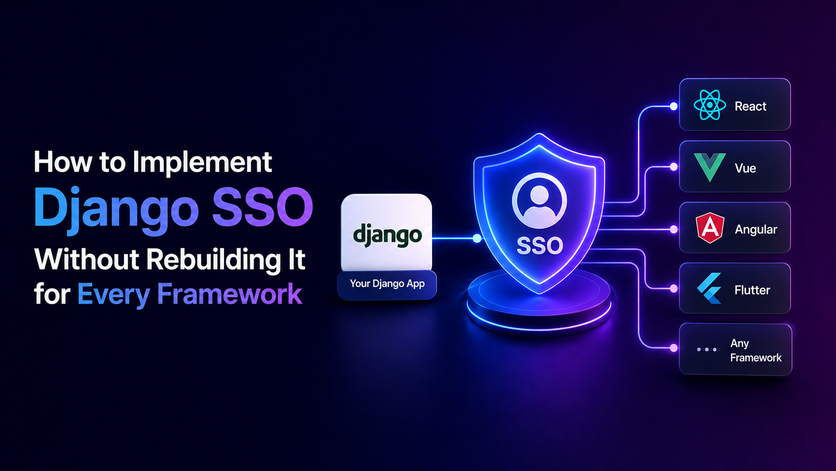

Managing Django SSO across growing platforms means avoiding the trap of treating enterprise login as a one-time chore. When big clients demand corporate access, hiding authentication inside your app controllers breaks your scaling and triggers endless custom patches.
Standard framework packages work for single apps, but multi-tenant setups and multi-framework stacks require a centralized identity layer. Moving federation, token validation, and key management to a unified hub keeps your code clean and ready for growth.
If you ever find your engineering group drowning in repetitive maintenance instead of building core features, diving into this architectural breakdown completely changes how you approach software scaling.
Why the Django SSO Ticket Always Arrives From Somewhere Else
Enterprise software sales usually hit a wall when a big corporate buyer refuses to sign a contract without login integration. This support ticket rarely comes from your own engineering roadmap because it drops out of nowhere through sales channels.
Big buyers need total control over how their staff logs in and hates the idea of passwords sitting inside an external database. They may want users to authenticate through their own identity provider or directory service using an enterprise SSO protocol such as SAML or OIDC.
Why Enterprise Buyers Need Central Control
Big companies live under strict compliance rules that force them to keep a close eye on staff activity using enterprise SSO solutions. When an employee departs, security teams need a dependable way to revoke access across connected applications using SSO alongside proper session, token, and deprovisioning controls.
Some enterprise customers may want federated SSO instead of standard passwords to meet security and compliance rules.
- Audit Rules. Companies have strict rules to check who looks at data. Keeping passwords in local databases means failing security audits right away.
- Quick Access Cutoff. When someone leaves the office their login must stop working everywhere at once. Security teams rely on this instant cutoff to stay safe.
- External Identity Control. Major clients may want users to log in through their own identity provider using SSO, while also needing automated provisioning and deprovisioning through SCIM or other directory tools.
Avoiding Messy Code With Good Setup
Developers often look at a sudden Django authentication ticket and think they can patch it up inside the main app. Writing quick scripts right inside the controllers ties user management way too close to product features.
- Separated Layers. Login code belongs on its own level far away from core product features. This keeps everything running smoothly when new connection rules pop up.
- Scalable Strategy. Good planning stops teams from wasting time on cheap fixes that fail later. Growth feels natural when new buyers ask for custom setups.
Getting Ready Before Sales Knock
Knowing why these Django SSO tickets show up lets engineering teams build proper defenses ahead of time. Treating identity management as a core business rule rather than a small feature saves tons of wasted hours.
Building scalable systems means your product takes on new login requests without breaking a sweat while supporting angular authentication.
- Early Planning. Spotting what clients need before they ask keeps engineering teams relaxed. Nobody has to panic when sales channels drop sudden requests.
- Business Reality. Managing identity centrally is a strict deal breaker rather than a tiny feature. Knowing this fact stops teams from wasting hours on temporary fixes.
Where Django Allauth and djangosaml2 Stop Being Enough
Developers usually start with standard community packages when adding corporate login to a Python app, much like how teams set up angular authentication for frontend single-page apps. These packages handle higher-level tasks like federation, protocol rules, provider setup, and user mapping so developers can skip building the core logic from scratch.
For a single product with a small user base these tools offer a quick and comfortable starting point. As a platform grows to support multiple enterprise customers, teams often need advanced features like tenant management, IdP connections, attribute mapping, and automated provisioning that go beyond a basic Django setup.
Why Standard Packages Break Down
Relying on basic framework packages creates major architectural walls across your services. Django authentication packages tie deeply into the app structure, so teams should check how well their chosen package fits into a multi-app or multi-framework setup as the platform grows. This tight coupling makes future updates painfully difficult for your engineering group.
- Tied Frameworks. Packages lock identity logic into a specific web framework and database schema. Changing anything later becomes super messy for your team. You end up stuck with rigid code that resists normal updates.
- Isolated Sessions. In a multi-service setup, teams need a unified approach to auth and session handling so services can securely recognize users without repeating the same login logic everywhere. This separation causes annoying sync errors when users jump between app features. People get locked out of places they should easily access.
Handling Complex Enterprise Demands
Big corporate buyers always ask for advanced features that standard libraries simply cannot handle. Basic packages fail to manage complex organizational hierarchies or strict tenant rules. Trying to force them creates a tangle of messy custom code.
- Advanced Provisions. Clients demand automated user provisioning and custom attribute mapping right out of the box. Requirements like SCIM provisioning, complex tenant lifecycle management, and organization-specific rules may need extra integrations or custom app logic beyond the core authentication package.
- Directory Hierarchies. Authentication packages handle who the user is, but complex company structures and strict access rules usually need extra application-level checks to manage who can see what. Trying to force them creates a tangle of messy custom code.
- Fragile Workarounds. Engineers waste hours building fragile monkey patches just to keep old packages running. This constant upkeep pulls focus away from building real product features.
Moving Beyond Standard Framework Limits
Stepping away from direct framework integration saves your team from ongoing maintenance headaches. Moving authentication to a separate tier keeps your main product clean and flexible. A decoupled setup lets your application grow without breaking under pressure.
- Independent Tiers. Moving authentication to a separate layer keeps your main product clean and flexible. Your core services stop worrying about identity protocols altogether.
- System Flexibility. A decoupled setup absorbs complex corporate directory rules without breaking your app. New clients connect easily without needing emergency code rewrites.
The Real Cost Shows Up on the Second Framework
The true penalty of poor authentication architecture rarely shows up during the first project. When a team builds corporate login inside one web app everything feels fine. The code works and the contract gets signed so everyone moves on to other tasks.
The real danger pops up only when the company builds a second app or a new microservice, especially if they are mixing technologies like Laravel authentication with python backends. Suddenly the old assumption that login was a solved problem completely falls apart.
Why Sharing Code Becomes Impossible
Adding a second application to your tech stack proves your first login setup cannot be shared easily. If the first app used database models to track sessions the new app cannot read those cookies.
Sharing one database across multiple apps creates a messy coupling pattern that ruins scaling. Rewriting the whole login flow for the second framework forces you to copy sensitive security code. Duplicate security logic is dangerous because a bug fixed in one place stays open in the other.
- Broken Cookie Sharing. Different apps cannot share a Django session just by using the same browser cookie. Sharing a session needs matching cookie settings and a compatible auth system, whereas federation or tokens let apps work together without sharing sessions directly.
- Dangerous Coupling. Forcing multiple services to use one shared database ruins overall system scalability and slows down future database updates.
- Duplicate Security Risks. Copying login code across different frameworks means security fixes often get missed in secondary apps.
The Hidden Price of Manual Work
Managing fragmented authentication across multiple services wastes tons of engineering time every single week. Onboarding an enterprise client requires repeating identical setup steps across five different codebases.
- Multi App Overload. Onboarding a single enterprise buyer forces your team to configure connections manually across every active service.
- Wasted Engineering Hours. Repetitive setup tasks steal valuable time away from building features that actually drive business growth.
Moving Past the Multi Framework Trap
Recognizing these hidden costs early forces leaders to build a centralized identity architecture. Stopping manual patches before your tech stack expands keeps your codebase clean and safe. A unified login layer ensures that adding new services never breaks user access. Setting up the right structure early saves your team from future headaches.
- Centralized Identity. Building a unified authentication layer stops teams from patching security rules across separate apps.
- Early Protection. Catching these scaling problems early prevents your codebase from turning into an unmanageable mess.
The Questions to Ask Before You Wire SSO Into Another Framework
Before writing code to connect a new web page to a login helper team members need to stop and look at how everything is built. Skipping this step usually leads to rushed code that fails company security checks. The first big question is figuring out where user logins begin and how other pages know about them.
Where Do Your User Sessions Live
Figuring out how logins work across different pages stops your group from building broken sign in setups. If your app relies on one shared database just to check a browser cookie you will hit major speed walls. You need a setup where login passes are checked safely without slowing down the whole system.
- Token Distribution. If your system uses signed tokens, services can check them locally using trusted keys instead of hitting the database every time, while other setups might rely on centralized session checks or token introspection. This keeps your app fast and stops heavy database lag as more people visit.
- Cookie Domains. Browser cookies need the right settings so people stay logged in when moving across different website sections. Getting this right stops annoying random logouts when visitors browse around.
- Cryptographic Checks. Services that accept signed tokens should verify the signature and key claims like issuer, audience, and expiration using trusted keys and standard protocol rules. Local checking keeps things safe without slowing down network speed.
How Do You Handle Certificate Updates
Enterprise identity providers periodically rotate signing keys or certificates depending on the federation protocol and setup. If a client updates their safety key your app should never need someone to manually push new code. Building a system that forces humans to step in for routine updates creates massive extra work. Your login helper needs to find updated security files on its own automatically.
- Automated Key Rotation. When identity providers support discovery or published metadata, applications can automatically fetch and rotate signing keys or certificates instead of needing code updates for every change. This automation stops sudden login crashes when corporate clients refresh their security settings.
- Metadata Discovery. Apps should read changing security links automatically to avoid unexpected sign in breaks. Letting the system adjust by itself saves your team from late night emergency fixes.
- Zero Downtime Rollovers. Identity integrations should support planned key rotation and, where possible, allow old and new keys to overlap so logins do not break during the switch. Keeping constant uptime keeps your big clients happy and trusting your platform.
Are Your Tenants Completely Isolated
Shared systems need strict rules to make sure users from different companies never see each other's data. You must ask how your login helper adds company tags into user session passes. If a small app part trusts a fake pass your whole product stays open to data leaks
- Tenant Claims. Login passes must carry clear company markers so connected app parts know who is visiting. Tokens may carry tenant details, but every application still needs to check those claims and enforce proper access rules before letting users view resources.
- Cross Tenant Prevention. App parts need to check company walls on every single incoming click without fail. Each service should consistently enforce tenant-aware authorization for requests and data access, with extra safeguards and testing to prevent data leaks between different tenants.
- Audit Readiness. Authentication systems should keep detailed logs for both successful and failed logins to meet security, monitoring, and compliance rules.
What Solving Django SSO at the Platform Layer Looks Like
Fixing company logins for the long term means moving the whole identity process out of separate web apps and putting it into one central place. Instead of hiding login code inside every single Django project or website tool you build you set up one dedicated login service.
How Central Identity Actually Works
In a centralized setup, the Django app usually acts as the service provider or relying party while a dedicated identity provider handles user logins. When a company user tries to open any part of your software your app sends them straight to the central login layer.
- Central Routing. A centralized identity layer can use details like an organization, tenant, email domain, or login hint to send users to the right identity provider. This keeps your primary project clean and stops traffic from getting tangled up during busy hours.
- Secure Passes. Central services hand out signed digital passes containing clear company markers for downstream tools. Tokens can carry identity or access details needed by the receiving service, but what gets included depends on the identity provider, protocol, scopes, and app setup.
- Simple Verification. Connected apps verify incoming passes locally using public keys instead of asking a database every time.
Why This Fixes Code Mess Forever
Moving authentication and federation to a shared identity layer cuts down on repeated auth code while letting each app keep its own session and access rules. If a client updates their security key your team only changes it in one single spot inside the central login platform.
- Single Update Spot. Centralized identity makes key management easier, while connected apps can use metadata or JWKS refresh to pick up key updates without needing code changes. Your team avoids manual updates across five different codebases when certificates change.
- Framework Freedom. Adding new web frameworks becomes simple since new services only need basic pass verification tools. You can build future microservices in FastAPI or Node without rewriting any core login logic, while also supporting Laravel SSO for external systems.
Transforming Enterprise Infrastructure
Solving identity at the platform level turns a messy web of custom code into a clean system that grows with your business. Your team stops wasting time on repetitive login fixes and gets back to building great features.
- Time Saving Focus. Engineering teams stop wasting hours on messy login fixes and focus entirely on product growth. Developers get back to building features that actually drive revenue for the company.
- Trusted Security. Big business buyers feel completely safe knowing their staff uses a strong and unified access system. Passing tough security audits becomes much easier with centralized logging and control.
Decide the Identity Layer Before You Write the Next Integration
Figuring out user login systems early protects the engineering team from future headaches. Letting different product teams build their own sign-in setups creates messy code, broken sessions, and wasted time.
Planning ahead means dealing with enterprise security demands before they turn into emergency tickets that block product updates.
Infisign UniFed
Infisign UniFed handles enterprise single sign-on by acting as a central hub that connects corporate cloud directories straight to your app stack.
- Instead of patching login logic inside every web app, UniFed handles the connection to corporate directories in one single place.
- When appropriate for your setup, validating signed tokens locally cuts down on repeated calls to a central auth service, though overall speed and security still depend on how everything is built.
- It can bring identity integrations into one place and support features like user provisioning, helping teams manage access control more consistently.
To schedule a live walkthrough and evaluate how the platform fits your infrastructure, access Free Trial Portal to book a session with their technical team.
FAQ
Why do enterprise buyers insist on corporate login integration?
Some corporate buyers need centralized identity integration to meet security, access control, and compliance rules while making it easier to manage user accounts across different apps.
What happens when teams code login logic directly inside product controllers?
Tying user management straight to application features creates rigid code that collapses entirely when a second corporate client arrives with different connection rules.
Why do standard framework packages fail as a platform expands?
Django auth libraries connect closely with the app, but larger multi-tenant setups usually need extra architecture to handle tenants, provider setup, user provisioning, access rules, and cross-app authentication.
How does a centralized identity architecture solve multi-framework scaling?
A dedicated identity layer can handle user logins through SAML or OIDC and pass down tokens, assertions, or session details that downstream apps can check based on their setup.
What is the commercial benefit of adopting a platform-level identity solution?
Centralizing access management stops wasted engineering hours on repetitive custom patches, letting developers focus on revenue-driven features while enterprise sales close smoothly.


