


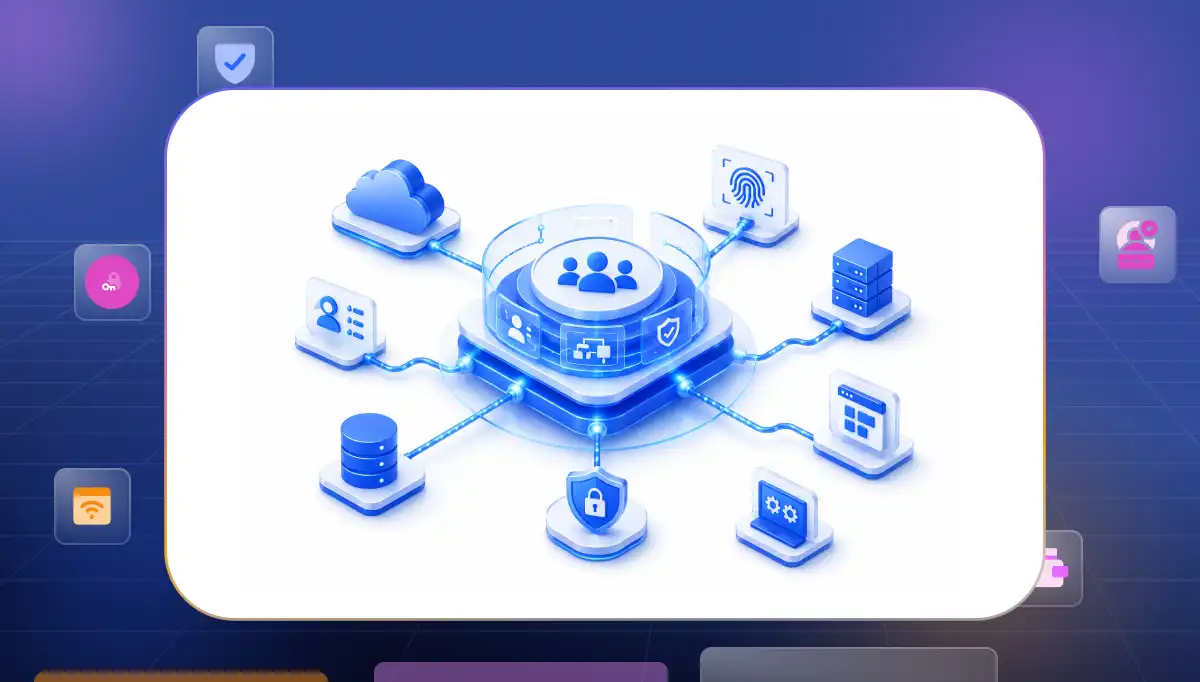

Managing access across many systems often gets messy and slow for modern teams. Identity orchestration provides a central coordination layer and it connects your identity systems with your applications. It also integrates your security controls and workflows to create a consistent identity experience and automate your identity-related processes.
This tool serves as a central control plane and it helps different applications and identity systems work together. It uses pre-built integrations and workflow automation to reduce the need for custom development. By using automated workflows you can stop manual work and keep your business moving fast.
In this guide, you will learn how to spot signs that your setup needs an update and how to pick the right tools. These steps help you regain control over all human and machine users in your network.
What Identity Orchestration Is and What It Is Not
Identity orchestration builds smart workflows that connect your scattered tools. It helps you manage complex setups by creating a unified layer that sits above your existing software to ensure everything functions well.
- Unified Control Layer. A middle layer between your apps and your login providers helps here, especially when you need to unify a complex federated identity setup. Security teams can centralize many identity and access policies easily. This approach reduces the need for repetitive configuration across individual applications.
- No Code Automation. Many identity orchestration platforms provide visual workflow builders. These tools simplify the design and management of your identity processes. You can automate tasks like user onboarding without writing custom scripts or using heavy code.
- Not a Replacement Tool. It is vital to know that such a service is not a new login provider. Instead it works with your current gear to bridge gaps that individual tools cannot cover alone.
Why Identity Orchestration Is Gaining Attention Among Security Leaders
Modern companies deal with a massive mess of cloud and office apps that rarely speak the same language. Many organizations are adopting identity orchestrating approaches today. This strategy improves visibility and consistency while reducing risk management issues across complex environments.
As Sanjay Shah, Chief Sales Officer at BeyondID, explains: "In 2026, identity orchestration will be the maestro bringing the best of all worlds together to create unified, efficient, integrated identity security programs."
- Solving Visibility Gaps. Systems spread across many clouds make tracking user behavior hard. Tech solutions provide a clear view so you can spot threats and enforce rules across your network.
- Eliminating Manual Bottlenecks. Manual tasks are slow and lead to many errors for your staff. By automating these workflows IT teams save time and focus on more important security work.
- Modernizing Legacy Systems. Many businesses struggle with older apps that do not support modern login standards. Such tech connects these old systems with newer tools to extend their life without expensive repairs.
Five Signs Your Stack Has Crossed the Identity Orchestration Threshold
If your team spends more time fixing broken connections than protecting the business you likely need a better way to handle fragmented identity management. These signs show it is time to move forward.
Running Three or More Identity Providers in Parallel
Working with many different identity platforms at once forces your team to handle a disconnected maze of settings. Trying to keep these separate worlds working together creates unnecessary stress and makes it very hard to maintain a solid security standard for your entire company.
- Fixing Policy Conflicts. When you use multiple systems you often end up with conflicting rules that fight against each other. A unified orchestration layer can help standardize and coordinate policies across systems. This layer reduces inconsistencies and cuts down on administrative overhead.
- Boosting Team Efficiency. Managing various login sources manually is a huge time sink that keeps your staff stuck in repetitive tasks. Centralized control lets you handle every input from one dashboard to regain your lost time.
- Strengthening Access Oversight. Scattered data makes it tough to know exactly who can see what across your digital assets. Bringing everything under one roof provides total clarity so you can monitor and secure your environment with full confidence.
Offboarding Still Depends on a Checklist
When a person leaves the company, your team often runs through a long manual process to cut their access. Relying on paper checklists or spreadsheets means you are likely missing important spots where old accounts remain open and vulnerable to attack.
- Manual Revocation Risk. Removing access for a person via many manual steps creates a security hole. Automation can significantly accelerate and standardize your access removal. The actual revocation timing depends on application integrations and your system architecture.
- Inconsistent Access Removal. Relying on checklists means some apps might stay open by mistake. Properly integrated systems can automate access revocation across connected applications. This setup reduces the likelihood of orphaned accounts when a user departs.
One Policy Change, Twelve Update Tickets
Updating a single access rule should be quick, but often you must submit a dozen tickets to change it in every app. This slow, broken process wastes your time and leaves your business exposed to mistakes during the long wait for updates.
- Administrative Overload. Updating access should not require new tickets for every single app. A smart tech layer allows you to make one change that updates your whole environment automatically.
- Slow Response Times. Moving one policy at a time keeps your team trapped in admin work. Centralized orchestration can reduce administrative effort significantly. It allows policy changes to be propagated across all your integrated systems efficiently.
Machine Identities Nobody Is Watching
Modern networks have thousands of non-human accounts like bots and service keys that rarely get any security review. Since these accounts do not have a human owner, they often become a major blind spot that attackers love to exploit for quiet access.
- Bot Blind Spots. Organizations are increasingly managing large numbers of service accounts and workloads. They also handle APIs and automation tools which can create visibility and governance challenges. You can bring these accounts under one roof so they stay safe.
- Hidden Access Paths. Machines often have access that humans forget to audit or remove. Central tools give you a map of where every bot goes.
AI Agents Already Acting Without a Governance Address
Artificial intelligence agents are starting to perform actions and access sensitive data across your company at high speeds. Without a central way to watch them, these smart tools operate outside your safety rules and create a giant hole in your security coverage.
- Rapid AI Growth. AI-driven systems can operate at a massive scale and speed. This rapid growth may require additional governance and monitoring along with stronger policy controls.
- A central layer keeps these agents inside your security rules so they do not cause risks.
- Policy Enforcement Gaps. Agents often work outside standard login flows. Governance and orchestration tools can help enforce policies effectively. These tools also maintain monitoring controls for AI agents and non-human identities.
The Business Cost of Delaying Identity Orchestration
Waiting to fix your messy setup creates hidden costs that drain your budget and increase your risk. Putting off such changes often leads to higher work costs and slower speed for your business while trying zero trust access.
In 2026, endpoint security is no longer just about access, it is about governing the entire infrastructure," says Carl Gersh, SVP of Marketing at IGEL Technology. "True Zero Trust requires active, centralized, and dynamic orchestration.
- Increased Security Risk. Identity silos and inconsistent policies can create major security gaps. Unmanaged accounts also introduce risks that attackers may exploit easily. A lack of control means you are often the last to know when a policy fails.
- Operational Inefficiency. Every manual hour spent on setup is money lost on real work. When IT staff gets stuck doing manual tasks the business slows down and cannot adapt quickly.
- Compliance Failure Costs. Compliance audits become more difficult when organizations cannot demonstrate who has access to sensitive systems and data. Without reports you risk fines or loss of trust during reviews.
What to Look for When Evaluating Identity Orchestration Platforms
Choosing the right tool is about finding something that grows with your needs and fits your setup. Focus on systems that emphasize ease of use and long term success with identity orchestration tools.
Connector Ecosystem Depth
Your platform needs to connect with the specific cloud apps and legacy systems already in your office. This approach helps you avoid building custom software and saves your team months of painful coding work.
- Ready Integrations. Look for a platform with many pre-built connections for the apps you use daily. A big library means you get started faster without building custom links.
- Scalable Library. A good vendor adds new connectors as apps change in the market. You need a partner that keeps up with your favorite cloud tools.
Non-Human Identity Coverage
Most security tools focus only on people, but your machine accounts are just as important to guard. A strong platform treats every service account and bot as a key identity that needs constant monitoring and strict rules to prevent unauthorized entry.
- Bot Security. Ensure the platform handles bots and service accounts as well as human ones. You need eyes on these accounts because they are often targets for attackers.
- Machine Lifecycle Management. Just like users, machines need access that starts and stops on time. Your platform should automate the life of every bot account.
Protocol and Standards Coverage
Your business likely runs a mix of very old software and brand new cloud apps. The platform you pick must bridge these different worlds by speaking all the common security languages while implementing identity orchestration so no application gets left behind or left open to threats.
- Broad Compatibility. The platform must support many standards to work with your old and new apps. This includes support for commonly used identity standards and protocols such as SAML 2.0, OpenID Connect (OIDC), OAuth 2.0, SCIM, LDAP, and API-based integrations where applicable.
- Legacy Support. Older apps often use different languages than modern ones. You need a tool that speaks both so your entire stack remains connected.
Audit Trail Across the Entire Identity Journey
Security teams need to know exactly who did what across the entire network at any moment, so they use identity orchestration across enterprise tools to track every login attempt and policy change needed to prove you are safe during every audit.
- Full Visibility. A true platform should provide a clear log of every action taken through an identity orchestration workflow to help you keep track of every change.
- Proof of Compliance. Auditors want to see a full path of identity activity. Central logs show exactly when access was granted or blocked during your workday.
Time to Production, Not Time to Demo
Do not get distracted by fancy marketing presentations that make everything look too perfect. You need a solution that installs quickly and starts working for your real employees without endless weeks of testing or complex setup requirements in your environment.
- Real World Speed. Evaluate implementation timelines using real deployment examples and integration requirements along with customer references rather than demonstrations alone. Focus on tools that offer quick paths to start working within weeks.
- Deployment Ease. Your team should get value quickly without needing months of training. Simple tools let you launch projects in short bursts of effort.
How to Get Started With Identity Orchestration
You do not need to change everything overnight to start seeing benefits. The best teams start small with implementing identity orchestration by focusing on one big problem and building out from there.
- Map Your Current Identity Landscape. Begin by finding where your biggest gaps exist today. Write down which systems cause the most manual work and where your view is currently failing.
- Define Your First Use Case. Choose one simple process to automate like an employee leaving or a basic app link. Focus on a project that gives a clear win for your team.
- Select a Pilot Project. Pick a small app to test your new platform. By starting with a pilot you can learn how the system works before rolling it out across your whole company.
For those focused on building a steady foundation, Infisign provides a neutral way to bring all your systems together. By removing the friction of complex tools, it allows you to apply consistent security rules across both cloud and older apps without the need for custom coding.
This approach helps you oversee everything from one place and gain a clear view of your entire environment, ensuring your security stays effective as your work grows.
Have questions about how to manage your bots and apps? Schedule a time to talk with us. We can walk you through the smartest ways to automate your security.
FAQ
How does identity orchestration handle AI agents and non-human identities?
Some modern identity orchestration platforms are extending support to machine identities and service accounts. They also manage workloads and AI-driven systems through policy enforcement and governance controls. These tools use automated policy checks and temporary tokens to ensure all agents stay within their defined security boundaries.
How long does it take to implement an identity orchestration layer?
Deployment speed varies based on your architecture but modern platforms prioritize rapid time to value. Implementation timelines vary depending on integration complexity and organizational requirements along with the scope of the initial deployment.
Does identity orchestration replace my existing IdP (Okta, Azure AD, Ping)?
It does not replace your current identity providers. Instead, it serves as an intelligent abstraction layer that sits above your existing stack, enabling unified control and seamless interoperability across your entire environment.


