

One Identity is a major enterprise security tool delivering a complete suite of Identity and Access Management (IAM) solutions.
Many complex global companies use One Identity. Enterprise groups spanning decentralized environments and hybrid setups use it.
Companies using One Identity move to a highly dynamic, identity-centric security architecture.
In doing this, they replace disparate, isolated security tools with a unified framework.
This is why we will cover its features, pricing, pros, and cons in this One Identity review. We will also cover anything else you need to know. This includes usability and architectural reality…
What Is One Identity?
One Identity is an inherently modular platform. It is engineered to deliver a broad suite of IAM solutions. These solutions span deeply complex enterprise architectures. It allows enterprises to roll out specific solutions. This targets immediate vulnerabilities while maintaining the capacity to grow.
The technology ecosystem is joined under the One Identity Fabric. The main pillars of this portfolio are One Identity Manager for IGA and Safeguard for PAM. It also includes Active Roles for AD Management and OneLogin for Access Management.
Identity Manager and Active Roles serve as the foundational governance and directory engines. These solutions optimize environments. They do this through highly granular delegation of control. They also use strict role-based policy execution.
What is One Identity used for?
Common enterprise use cases for One Identity include:
- Automated Lifecycle Management: This fully automates complex onboarding. It also automates internal role transitions and departure processes. One Identity does this by tying strict Role-Based Access Control to authoritative Human Resources data.
- Identity Governance and Administration: This secures enterprise data. It makes certain individuals only maintain access strictly necessary for their specific roles. It does this via One Identity Manager. This operationalizes the principle of least privilege. It works across hybrid and cloud environments.
- Privileged Access Management: This securely stores, authenticates, and deeply analyzes highly sensitive sessions. One Identity Safeguard fundamentally alters admin tasks. It changes how administrators interact with essential tech systems through centralized vaulting.
- Active Directory Security: This secures native AD and Entra ID environments. It does this by applying a highly granular delegation of control. One Identity stops lateral privilege escalation. It limits IT staff permissions to exact operational tasks.
- Context-Aware Authentication: The system secures the enterprise perimeter. It uses OneLogin SmartFactor Authentication to do this. It continuously judges access requests. It bases this on contextual variables. These span network location and device security posture.
- Threat Detection and Response: One Identity utilizes automated Identity Threat Detection and Response Playbooks. These mechanisms quickly disable compromised accounts. They also launch targeted attestation reviews during active security incidents.
- Non-Human Identity Security: This extends broad governance beyond traditional human users. Active Roles manages non-human identities, service accounts, and application pools. These are frequently exploited vectors in modern cyberattacks.
Key Features of One Identity
One Identity’s main features include:
- Behavior Driven Governance: This grants granular, real-time visibility. It shows which access rights are actively being utilized. It identifies dormant entitlements. This directly shrinks attack surfaces. It also drops unnecessary software licensing costs.
- Indexed Optical Character Recognition: This allows security analysts to instantly query massive volumes of data. They can search recorded privileged session video logs. It locates specific command-line inputs. This drastically cuts the Mean Time To Respond during investigations.
- Privileged Access Governance: This smoothly links Identity Manager and Safeguard. Privileged Access Governance allows end-users to request access. They can attest to both standard and privileged access. This happens through a single, unified policy engine.
- AI-Powered Compliance Reporting: These built-in AI tools allow administrators to utilize read-only queries. They use natural language queries to extract complex compliance data. This significantly speeds up the reporting process. This helps with stringent regulatory audits.
- A Large Number of Out-of-the-Box Connectors: The platform supports thousands of pre-built custom REST connectors. It supports RADIUS and native SDKs. This facilitates immediate connections. It works for key tech systems like SAP, Oracle, and Microsoft Exchange.
- Pattern-Free Analytics: This employs advanced AI-driven predictive models. It builds a baseline of normal administrative activity. Safeguard monitors sessions for unusual keystrokes. It also looks for unexpected geographic requests. It automatically terminates suspicious sessions in real time.
One Identity Pros and Cons
Most One Identity reviews state advantages for enterprises. They favor groups seeking a holistic, linked fabric design. However, severe directory synchronization bugs exist. Hidden base level costs also exist for specific operational environments.
One Identity Pros
- One Identity centralizes management through a logical graphical interface. This architectural design allows managers to visualize complex application access. They can view user hierarchies intuitively from a single page.It accelerates deployment velocity compared to complex legacy competitors. The appliance-based PAM architecture requires far less specialized engineering. It makes high availability clusters easier to build.
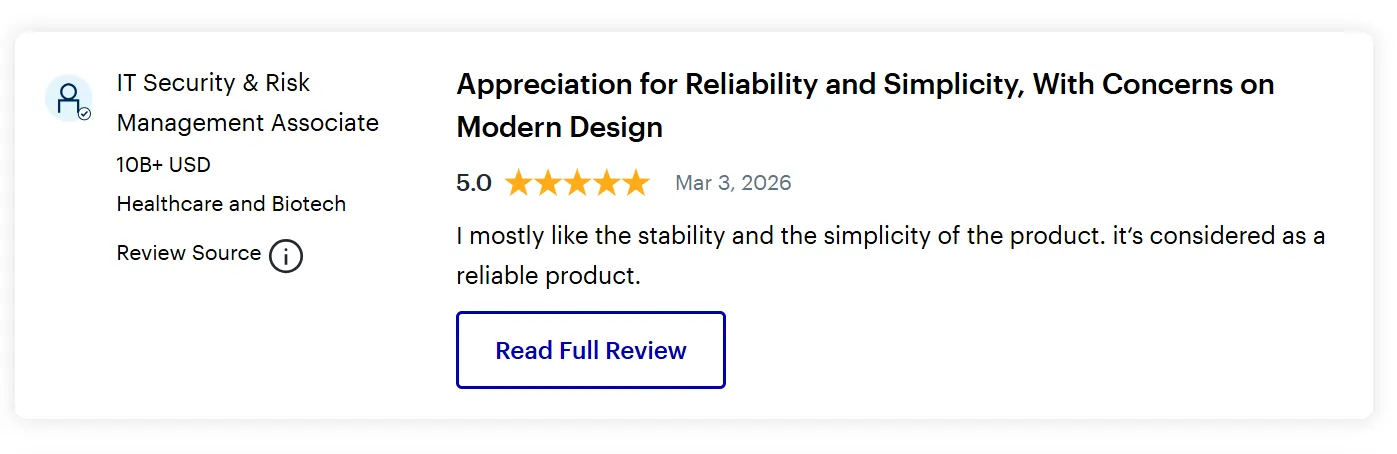
- It accelerates deployment velocity compared to complex legacy competitors. The appliance-based PAM architecture requires far less specialized engineering. It makes high availability clusters easier to build
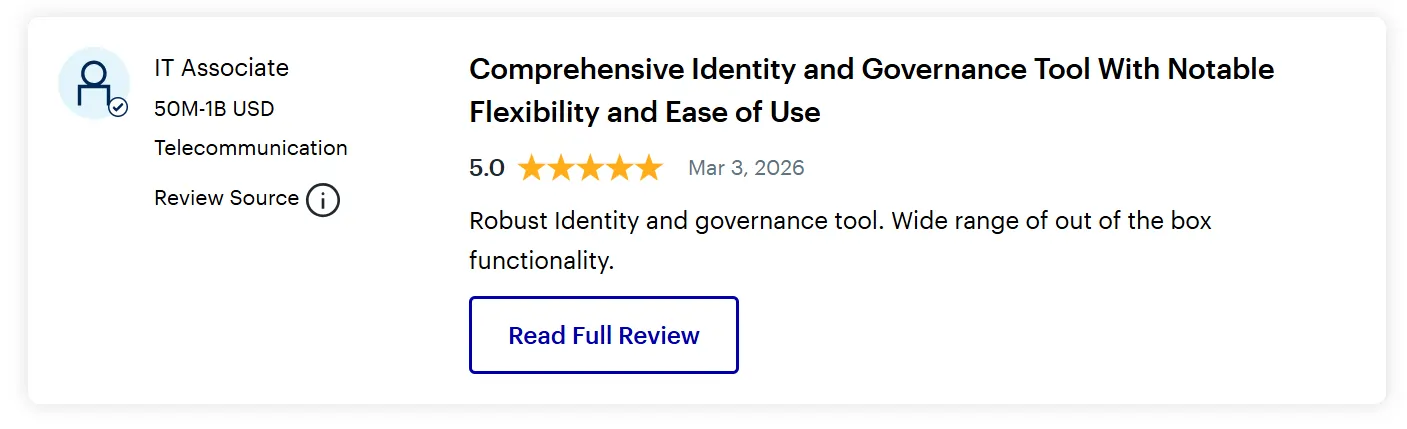
- One Identity flawlessly executes staff change and departure processes. It strictly ties dynamic RBAC to authoritative HR directories. This automation drastically cuts dependency on IT support. It also shrinks insider threat windows.
- The identity tool grants highly stable remote administration functions. The software performs effectively over Virtual Private Networks. This allows dispersed global IT teams to manage accounts without significant latency.
One Identity Cons
- Native legacy OpenLDAP directory connections frequently fail. They might also require highly specialized custom engineering workarounds to function properly.
- Active Directory synchronization anomalies routinely occur during operations. Manual helpdesk changes made directly in AD sometimes fail to reflect accurately. They fail to show in the One Identity dashboard. This causes downstream access failures.
- The web portal Graphical User Interface is decidedly hard for a beginner. This demands extended training periods for new IT staff. It makes internal enterprise branding highly complex.
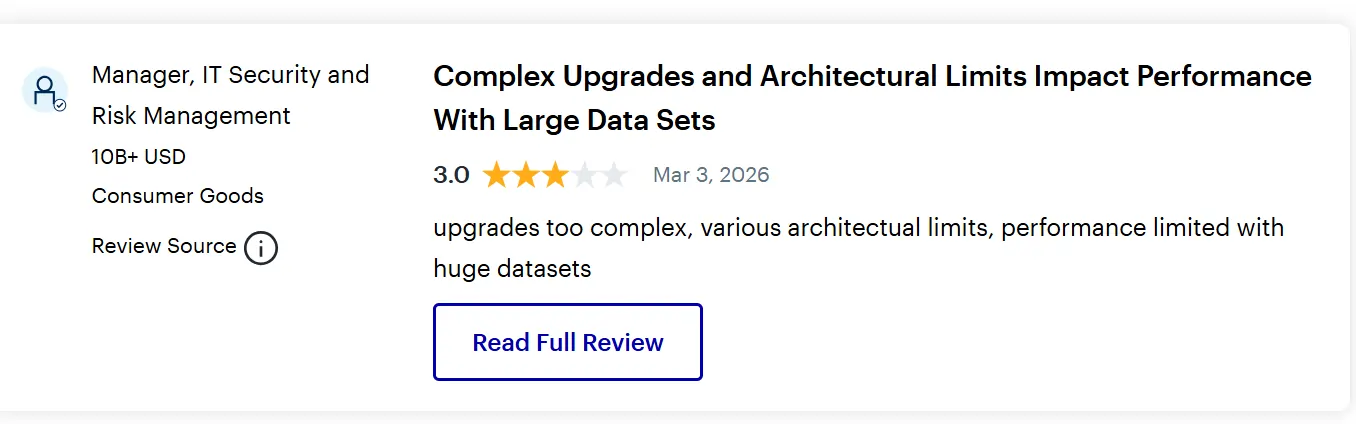
- Customer support resolution times are inconsistent. This affects the broader Identity Manager suite. Complex issues can take days or even weeks. It takes this long to receive a satisfactory technical resolution from higher-tier engineering teams
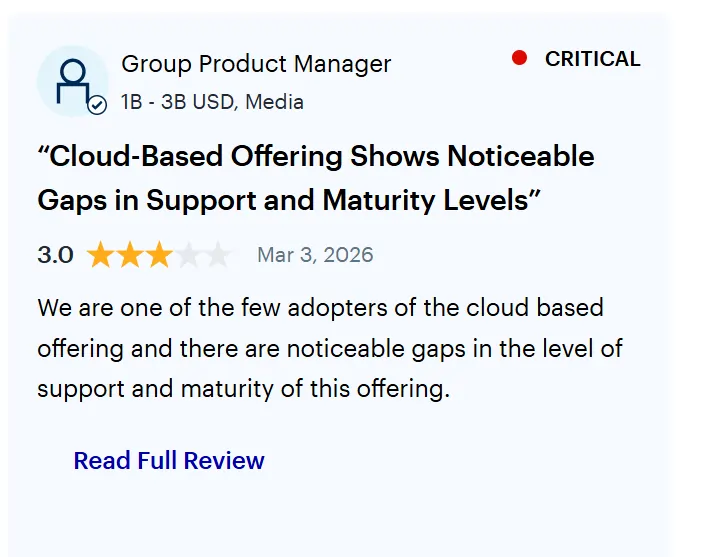
- Managed on-premises systems mandate strong backend SQL databases. Operating high-availability SQL clusters adds massive unforeseen overhead. This happens via SQL Server enterprise licenses and continuous patch testing.
One Identity Pricing
Most One Identity reviews state its pricing spans for both subscription SaaS and traditional perpetual financial paradigms. This depends heavily on the specific module deployed. Access Management utilizes transparent IDaaS billing.
At the same time, governance setups represent heavy enterprise-grade investments.
Complex mid-market Identity Manager deployments can easily exceed $53,000. This is in baseline software costs alone. They are supplemented by mandatory multi-year maintenance contracts.
This breakdown below illustrates the diverse financial dynamics:
One Identity Alternatives
The IAM and PAM markets are currently highly consolidated. This is against the broad design of One Identity. Many procurement professionals review the following competitors. They do this to address various isolated niches. In this One Identity review, we’ve the alternatives to One Identity below. In doing so, we prioritized them based on architectural focus. We also looked at deployment complexity, and specialized technical functions:
- SailPoint is widely recognized as the definitive market leader. It leads in pure-play Identity Governance and Administration. It excels in heavily regulated environments. However, it requires extremely time-consuming and expensive third-party tech vendors. This is compared to the native PAM link found in One Identity.
- CyberArk operates as the dominant, entrenched force. It works well for base-level Privileged Access Management. It grants the deepest technical specialization for sensitive accounts. However, it is frequently cited as highly complex to manage. It requires advanced coding skills compared to the simple design of Safeguard.
- Okta yields the most smooth, cloud-native SSO experience available. It has over 7,000 pre-built connectors. However, it acts mostly as a first access step. It historically lacks the deep, complex internal governance engine. This engine is found within the One Identity Fabric.
- Microsoft Entra ID is the logical, ubiquitous choice. It works for enterprise groups deeply entrenched in the Microsoft 365 ecosystem. While very capable, it can become prohibitively expensive at scale. This happens when advanced identity governance features are required for external users.
FAQs on One Identity
What is the fundamental difference between perpetual licensing and subscription SaaS for One Identity?
Perpetual models involve a massive upfront capital expenditure. In this model, the enterprise owns the software. However, they are irrevocably bound to 20 to 25 percent annual maintenance contracts. Subscription SaaS models shift costs to predictable monthly fees. They make certain the software is always on the latest patched iteration. They also wipe out the catastrophic hidden costs of auxiliary SQL databases.
How does One Identity Safeguard combat compromised administrative credentials?
Safeguard counters hijacked sessions by employing pattern-free analytics. It also uses AI-driven predictive models. It builds a behavioral baseline to do this. The analytics engine monitors for unusual keystroke dynamics. It watches for unexpected geographic access requests. It then automatically terminates suspicious sessions in real time.
What are the hidden costs associated with an Identity Manager deployment?
The true Total Cost of Ownership is heavily burdened by professional services. These are required to map complex RBAC matrices. They are also needed to build custom database connectors. Furthermore, buyers face massive unbudgeted overhead. This comes from mandatory backend SQL Server enterprise licenses. It also comes from specialized IAM developer salaries, which average around $78,000 annually.
Can One Identity manage non-human identities like service accounts?
Yes, One Identity Active Roles specifically extends broad governance to non-human identities. It successfully manages service accounts and application pools within Active Directory. This limits vectors that are frequently exploited in modern cyberattacks.
Does One Identity replace Microsoft Active Directory?
No, it operates symbiotically to secure it. Native Active Directory architectures notoriously lack granular governance features. One Identity Active Roles addresses this severe flaw. It strictly defines what specific IT staff or scripts can execute within AD. This prevents lateral privilege escalation.